Unknown's avatar

Posts by Kate Treick

I am a professional photographer with a passion for recording a family's history through photos. Family history is also my hobby, and this site offers reflections on my own history and other things I have learned from tracing histories for my friends.

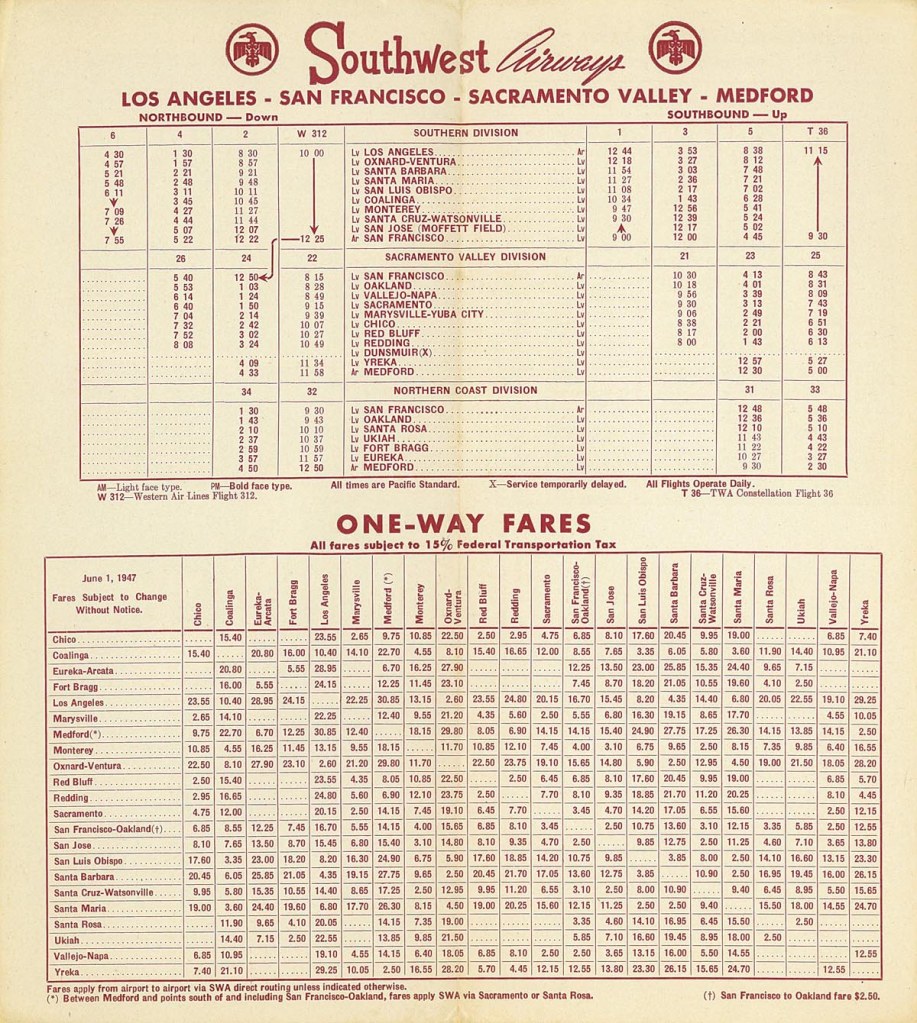
Southwest Airways

My dad, James W. Brown, has been writing some wonderful stories, prompted by a brilliant gift from my sister Kristi. I asked if we could include his stories here, to keep everything in one place, and he readily agreed. So, I would like to introduce this guest post by one of my favorite storytellers of all time.
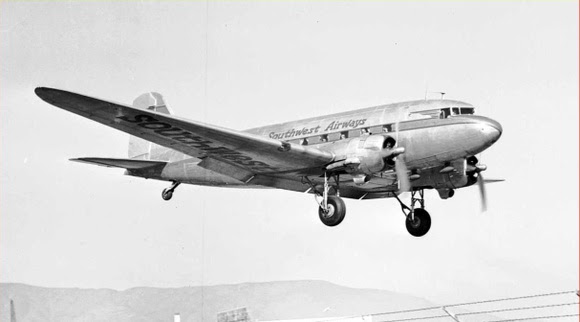
After my father’s training in Minneapolis to learn how to run the operational side of an airline, our family was again reunited in the San Fernando Valley as the world emerged from WWII. I didn’t see much of my father since he was heavily involved in starting a new airline and a new type of airline from scratch.

The Valley was still largely rural at that time and housing was very scarce. We were crammed into a house with at least one or two other families. I don’t remember much from that time but I do remember that one of our housemates woke up the whole house from time to time with a blood-curdling scream! He had been a fighter pilot whose plane was shot down over the Pacific and in the long, descent into the ocean the cockpit was filled with fire. He managed to parachute before the flaming fighter hit the sea but relived the terror in nightmares from which he awoke sweating and screaming.

Next, I remember living in a motel near Palo Alto separated from the two or four lanes of Highway 101 by only a gravel parking lot.

Finally, we moved into an old farmhouse out on the mudflats of East Palo Alto. Our nearest neighbor was an old gentleman who lived on his chicken ranch down the road, Mr. Pearson. Mr. Pearson had lots of cats and kittens on his ranch to keep the rats and other pests under control; too many cats. From time to time he would gather up a batch of kittens, put them in a gunny sack, and drown them in a rain barrel. I saved more than one of these cute little creatures by running home and begging my mother to let me have him for a pet. “Please, Mom—Mr. Pearson’s going to drown him!”

I remember helping my Mom do the laundry in a washing machine that had a “wringer” attached. The wringer was a pair of crank operated rollers what would squeeze the water out of the clothes as you took them out of the washer and ran them “through the wringer” before hanging them on the clothesline to dry. Mom warned me not to get my fingers near the wringer, lest they be caught and crushed!

On Saturdays the few kids from the neighborhood would sometimes gather on the bunk bed in my room to listen on the radio to “The Lone Ranger”, “Sky King”, “The Green Hornet” and such fare.

We were one of the first families to have a television set and I remember sitting in front of the set watching the “KPIX” test patten on the black and white screen waiting for “It’s Howdy Doody Time” to come on the air.

Transportation was hard to come by, too. I believe that we had the usual Chevy convertible, but my Dad also acquired an old Model A Ford to commute to San Francisco Airport, where he now was headquartered. I don’t know if the Model A had a starter motor, but I do know that it had a hand crank up front and that starting it was almost as tricky as starting an airplane: you had to “advance the spark” and maybe even fiddle with the hand throttle while someone out front hand-cranked the engine to get it going.

Meanwhile, a relatively small group of very creative Southwest Airlines employees worked day and night to set up the navigational systems required by a scheduled airline. A genius radio man, Ed Rein, and his crew established a network of navigational aids on the West Coast from Oregon to L.A. The system relied heavily on an instrument in the airplane called an automatic direction finder (ADF). An ADF is like a compass dial in that it is a round instrument containing a needle like the hand of a compass which points at the location of a radio station. If the station is straight ahead, the needle points to “0°” and if the station is off the right wingtip the needle points to “90°”. If you keep the needle pointing at “0°” you will fly directly over the radio station. If you tune the ADF to a second radio station it will tell you the direction to that station. The point where the lines from the 2 radio stations intersect is your position. The ADF could point at a commercial radio station like KGO-AM (“810 on your dial”) in San Francisco or a special navigational radio station. As Southwest Airlines’ chief pilot my Dad flew these routes in Southwest DC-3 aircraft to evaluate and test the systems before they were submitted for certification and put into service. These wonky electrical engineers were not beyond an occasional practical joke themselves. My Dad was well known for his ability to “grease” a DC-3 onto the runway with such finesse that you couldn’t tell you had landed. The jokesters thought that it would be great fun to all gather in the front of the DC-3 passenger cabin and then, just as the airplane flared for a perfect 3-point landing (the DC-3 was a “tail-dragger”) they would all run to the back of the cabin to shift the weight so drastically that it would spoil the landing. But they never succeeded—at least as I recall the story told to me by Mr. Rein.

As the chief pilot, it was my Dad’s responsibility to give a “6-month check ride” to each of the airline’s captains to be sure that they maintained sharp flying skills. He would, occasionally, allow me to go along on a check ride as the sole passenger in the DC-3’a cabin. The check-ride would put the captain (and the airplane) through its paces and push both to the limit to be sure the captain could handle any emergency, or “unusual attitude” encountered. The captain would don a “hood” which prevented seeing outside the cockpit so that maneuvers must be performed solely by looking at the instrument panel. He was required to perform semi-aerobatic maneuvers such as steep turns with the wingtip pointing straight at the ground and “power-on” stalls where the airplane is put into such a steep climb that it feels like it is pointing almost straight up. Eventually, the airplane slows down so much that the wing can no longer generate enough lift to support flight. That’s called a “stall”. At that point the nose of the airplane drops precipitously and the airplane dives until it regains enough speed to fly again. To the airplane’s occupants, it feels like going over the top of a roller coaster. It is a pretty violent maneuver even when the airplane’s propellers are throttled back to an idle. With “power-on” it is an awesome maneuver. In a twin-engine commercial airliner it is beyond awesome. I loved it.

Southwest Airlines was one of the first and most successful of the “feeder airlines” as they were called. They served small cities from where they carried passengers to larger airports from which the transcontinental (“trunk”) airlines like United, American, and TWA carried them on longer routes. Virtually all of the feeder airlines flew fleets of DC-3s, the ubiquitous workhorse called the C-47 by the military, produced by the thousands for WWII transport and paratroop service and plentiful after the war as “war surplus” for civilian use.
Southwest was highly creative in its use of the DC-3. They perfected the “stair door” that opened from the top so that it formed a stairway for passengers to enter the airplane. Because the DC-3 was a “taildragger” the rear portion of the fuselage was low to the ground and the “stair door” was a quick and easy entrance to the passenger cabin.
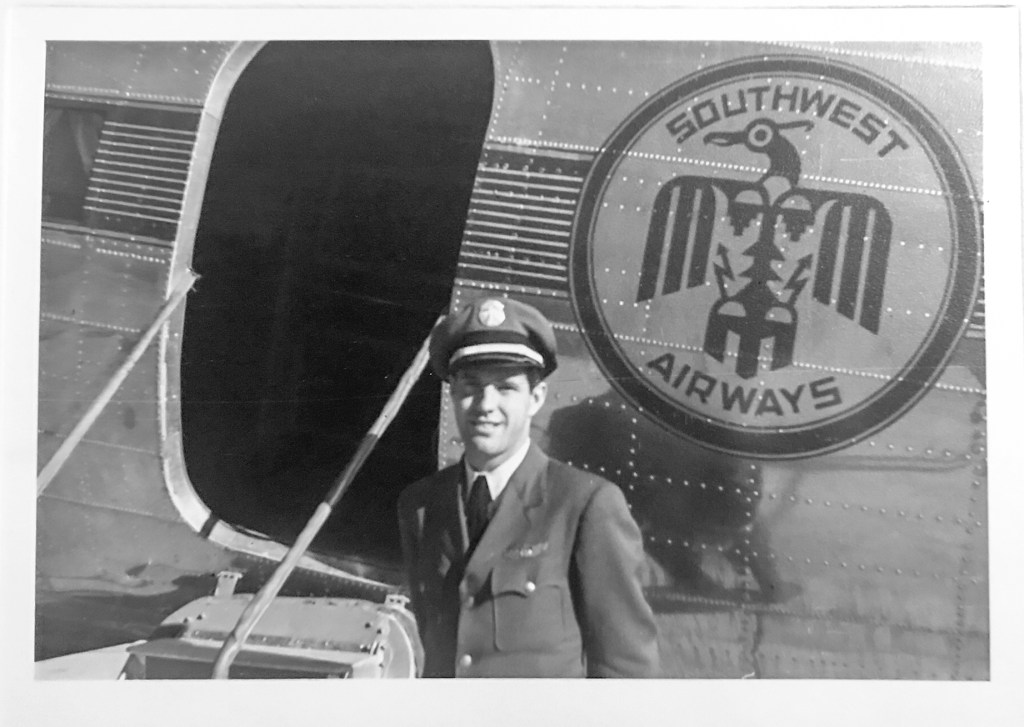
In some ways, Southwest was like the early railroad trains that crossed the American plains in the 19th century making “whistle stops” along the route just long enough for a few passengers to jump on board. Southwest could slip the DC-3 into the airstrip of a small town and be back in the air in 5 minutes. How they did it was ingenious. As the captain taxied up to the little passenger terminal building, he would shut down the left engine so the propwash wouldn’t blow the boarding passengers away, but leave the right engine running so that he didn’t need an external electrical source to start the engines. As the plane rolled to a stop, the purser would open the stair door so passengers could deplane or board. Then the station agent would march the passengers out to the plane with military precision, help them board and handle the luggage through the baggage door at the rear of the plane. When the passengers were belted in, as the stair door was closed, the captain would fire up the left engine, taxi away, push the throttles wide open as he rolled onto the runway and be back in the air seconds later. There weren’t likely any other airplanes around the lonely airstrip, so they were always “number one for departure.”

Business was good, and Southwest wanted to start replacing the venerable DC-3s with more modern airplanes, like the Martin 404 with its tricycle landing gear which was rapidly replacing the older taildraggers. Japan Airlines had a used Martin 404 for sale. The only problem was that it was in Japan. No problem, for the little “can-do” airline. They dispatched my Dad to Japan to pick up and ferry the airplane to San Francisco for refitting into the pride of their fleet! Ferrying a two-engine airplane across the North Pacific is not for the faint-hearted. They stripped all the seats and partitions out of the fuselage and filled it with extra fuel tanks for the long flight far beyond the 404’s normal range. Undaunted by the challenge, my Dad and his co-pilot took off from Japan. My Dad had even purchased gifts in Japan for the family: a complete set of Noritake china for my Mom and the fanciest, heaviest Japanese bicycle you have ever seen for me. Once in the air, the 404 proved to be a well-used airplane indeed, with a worrisome miss in the left engine that kept the sole occupants, the two pilots, on the edge of their seats as they nursed the rough running airplane to the mainland.

I remember that starting a radial piston engine from a cold start, as they did when starting a flight from a major terminal like San Francisco, was quite a ballet. The captain started the right engine first. A ground crew member stood near the engine with a portable fire extinguisher. An auxiliary gas powered electrical power generator was plugged into the engine. The captain adjusted the throttle and fuel mixture controls and engaged the starter motor to prime the engine as the copilot counted the number of propeller blades rotating past his window. When the copilot had called out the number of blades needed to prime the engine the captain would call out “contact” and flip on the ignition switch and play the throttle and mixture controls until the big radial, belching copious clouds of smoke, would sputter, then roar to life. Then they would repeat the ballet until all engines were running. An engine didn’t always start on the first try! Starting all four engines on one of the big airlines’ transcontinental flights was quite a show.

When it was placed in service, my Dad, as the No. 1 seniority pilot, generally flew a Martin 404 schedule. The family home then was in Santa Clara, not too far from the San Jose municipal airport. I would sometimes ride my bicycle to the airport to see my Dad as his flight landed and departed. On rare occasions, he would signal the ground crew to escort me to the airplane and I would enter the cockpit through the forward door in front of the cabin. A temporary seat (occasionally installed for a check pilot to observe and evaluate the pilots) could be installed just behind the pilot and co-pilot. I vividly remember one flight in particular. At that time United Airlines was competing with the “feeder” airlines on some of United’s shorter routes with the Convair 440 aircraft. The Convair 440 was a twin-engined propeller driven plane with two big radial engines, just like the Martin 404. In fact, the planes looked so much alike that the inexperienced observer could confuse the two. On one competing route, United flew the Convair to San Francisco with a stop in Monterey. Southwest flew the Martin 404 on the same route, but with an additional stop in San Jose. United scheduled its flight to depart Monterey and come through the Saratoga gap in the Coast Range at the same time that Southwest was climbing out of San Jose so that their flight paths converged at the south end of San Francisco Bay. On this particular flight I was sitting on the jump seat where I could see out the cockpit windows. Sure enough, off to the left I could see the United Convair coming through the gap and starting its descent for SFO. The Martin 404, under full takeoff power, was climbing to cruise altitude for the short flight. Dead ahead was the southern tip of San Francisco Bay with the Dumbarton Bridge stretching across the bay a few miles ahead like a great finish line. The significance of the Dumbarton Bridge was that it was where airliners were allowed to contact the San Francisco air traffic control tower to request clearance to land and ask for the inside of the two parallel runways, shortening the taxiing distance and arriving at the gate first. With two captains urging maximum performance out of a combined four big radial piston engines, it was an exhilarating experience. I can’t honestly say that I remember who was first to call the tower for clearance, but I know that “Red Hot Henry Brown” didn’t like to come in second.

I remember one other time when I was sitting on the jump seat. It was on a stormy night flying into Los Angeles International Airport. Today’s airplanes—even single engine private planes—have beautiful, big visual displays that make instrument landings pretty simple. It wasn’t so easy 70 years ago. Flying in cloud I couldn’t see anything but the misty red reflection of the flashing wingtip navigational lights. I had on a headset from which I heard the steady tone of a radio signal. What seemed to be a steady tone, really wasn’t. It was a combination of 2 tones being sent in a narrow, directional beam by 2 radio transmitters at the end of the runway. One transmitter was transmitting in the letter “A” in Morse Code (dot-dash). The other transmitter was transmitting the letter “N” (dash-dot). In the narrow directional beam where the two letters overlapped, the “A” and “N´ combined to produce neither—only a steady tone. That’s what I was hearing because we were “on the beam”. If the aircraft drifted a little to the right or left of the beam, you would begin to hear a faint “A” or “N” letting you know that you were drifting off course. That’s how you stayed on course. Another equally quaint system let you know if your approach was on the proper “glide path” to arrive at the end of the runway and not too short or too long. A radar beam was directed down the glide path that gave the altitude of the target. An air traffic controller on the ground communicated this vital information to the pilot with a continuous message, “On glide path”…”10 feet below glide path” and so forth and the pilot would slightly adjust the throttles to stay on the glide path. Finally, we broke out below the low clouds and could see the bright runway lights straight ahead and on a perfect glide path. It sounds simple enough but on a dark and bumpy night with so many “souls on board” behind you, you know that you’ve put in a good day’s work when the wheels kiss the tarmac, and you taxi safely to the gate.

The era of the “feeder” airlines has closed replaced by the corporate subsidiaries of the few remaining major airlines flying fast little regional jets that, with the least experienced, lowest seniority pilots, do the most “real flying” left in the commercial aviation industry.

Telling Her Story

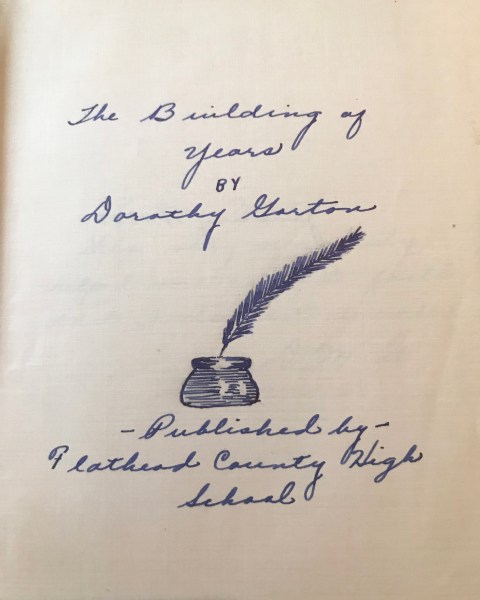
dorothy title page

My Grandma Dorothy was a storytelling grandma. She moved to Santa Barbara when I was four or five, and babysat us many Friday evenings. I still remember lying in the dark on my bunk bed, Grandma on the twin bed with Kristi, and her voice as she told stories about growing up on the farm in Kalispell. The barn dances, the cold winters, summers on Lake Blaine, caring for the animals, the time the pigs were intoxicated by the rotten apples that she and her siblings threw into the pen.

Those stories would be enough, but they are not all that I have. 

When she was a senior in high school, Dorothy wrote an autobiography for a school project. She entitled it The Building of Years, and in it she chronicled the family history she knew, as well as details from her childhood. It is a priceless treasure.

The book is charming, with its black binding and page after page of her neat script in blue pen. She added a few illustrations in ink, as well as several photos. There are occasional additions on the facing pages as she corrected information or added details later in her life.

She dedicated the book to her mother, who “very sincerely helped me collect facts that I do not remember.” So, I have my great grandmother, Thelma Gorton, to thank as well.  She also writes, “In this book I have preserved facts of my former ancestry and also many little incidents of my life this far.”

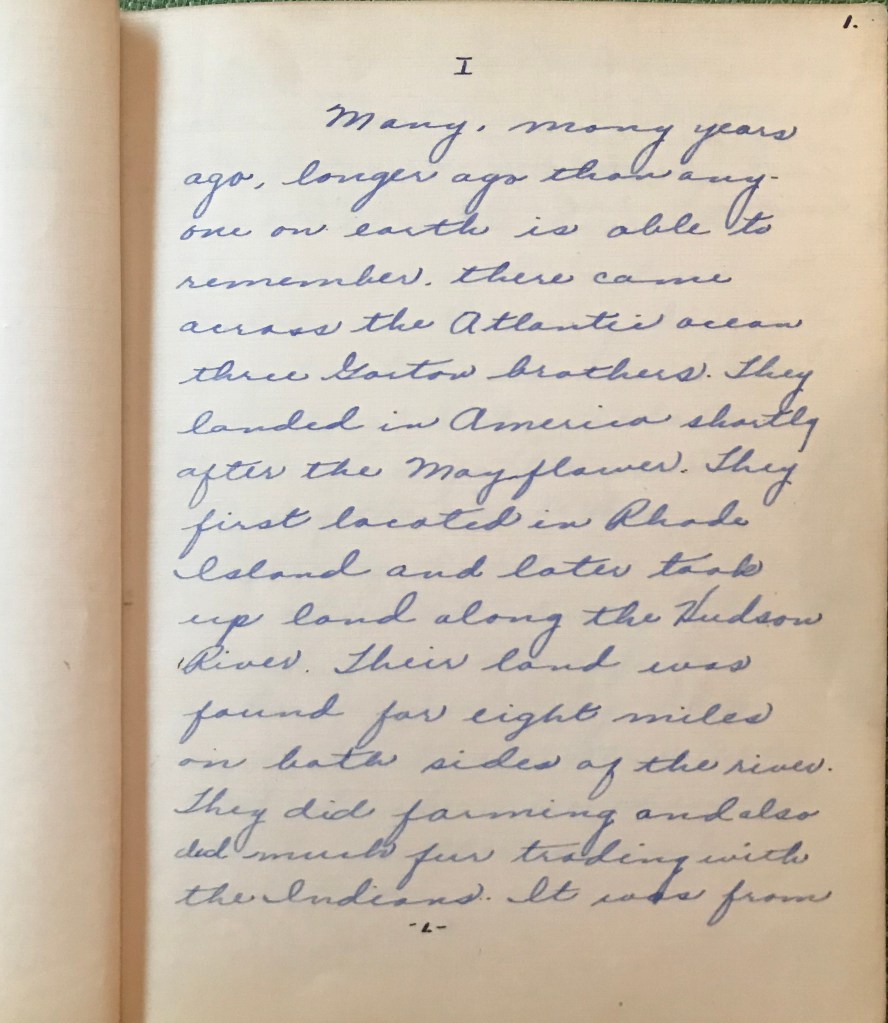
Dorothy begins her book, “Many, many years ago, longer ago than any one on earth is able to remember, there came across the Atlantic ocean three Gorton brothers. They landed in America shortly after the Mayflower. They first located in Rhode Island and later took up land along the Hudson River. Their land was found for eight miles on both sides of the river. They did farming and also did much fur trading with the Indians.” And indeed, this is true. Samuel Gorton arrived in 1636 in New England, with his wife Mary and their three children. His story is well-documented, and has many twists and turns I will describe in another post. I love that my grandmother was aware of this hundreds-year-old history, and celebrated it in her own account.

It is this rootedness in story that characterizes most of my memories of my grandmother. I have another of her journals that chronicles the next chapters of her life, and it is another of my greatest treasures. I spent many months transcribing it, grateful that I learned at an early age to read her scrawling cursive.

Grandma Dorothy’s life on the farm in the twenties and thirties seemed as removed from my own as the Little House books, but she always made the stories live. I am aware, as I read her account of her early life, that my own seems sometimes too current to be interesting–and yet, in fifty or eighty years, it will seem old-fashioned.  I am becoming aware of the value of recording a few details of my own life and experiences, hoping that a future granddaughter will find a connection in trips to the beach, watching scurrying crabs and hermit crabs, or in time spent curled in a chair snuggled next to my giant St. Bernard.

I am also aware of the great family legacy present in story. Not all of the stories are easy or good. Parents and children who died too young, ravaged by disease and war; tales of financial loss at the hands of swindlers or in the wake of failed crops; pain caused by favoritism or misunderstanding. But these experiences and the stories that followed have shaped generations of family, and play their significant role in making me who I am.

From the Coal Mine to the Silver Mines

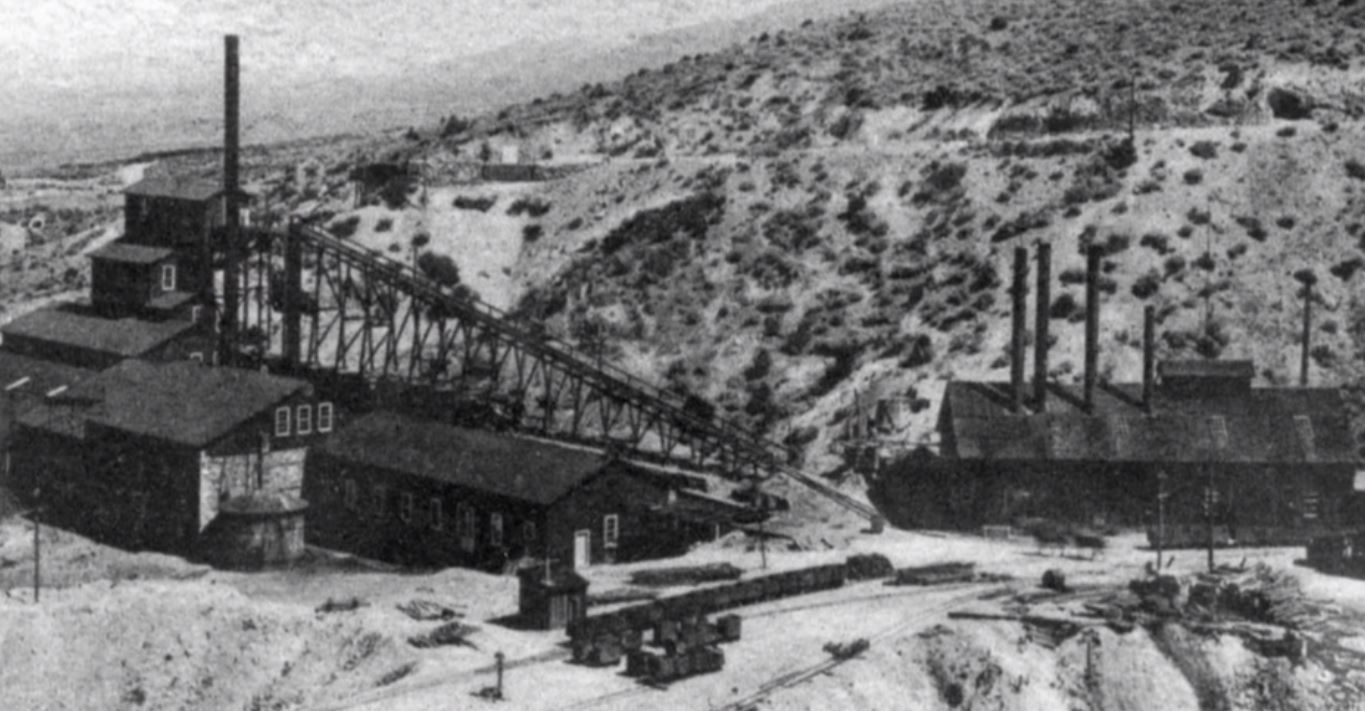
Austin Silver Mine

I was watching a show on Netflix the other day–Ghost Town Gold, in which two guys visit the kinds of ghost towns my family poked around in on vacations. But instead of looking for cool rocks like we did, they go into old barns and buildings and come out with fabulous historical artifacts. In this particular episode (Season 1, Episode 1, around the 30 minute mark), the two hosts explored the town of Austin, Nevada.

Austin rang a bell. Was that where my 3x- Great Grandfather had mined silver? I pulled up the family tree.

But first, a little back story.

On April 12, 1852, nine-year-old William Jenkins arrived in the harbor of New York City on the ship Pathfinder. His family, including his parents William and Elizabeth, brother John (age 14), and sister Anna (age 3), had moved from Wales to seek new opportunities. In her family history, my grandmother recorded: “They settled in St. Clair, Pennsylvania, where his parents lived for the rest of their lives.  His father, William Jenkins, St., died soon after they settled in Pennsylvania, but his mother lived until after she was ninety years old.  She lived in a little white house by herself and always kept a white pig.  She was a very clean old lady and always gave the pig a scrubbing every Saturday.” This last detail is all the more significant when you realize that St. Clair was a coal mining town, and that spotless old lady was a coal miner’s wife.

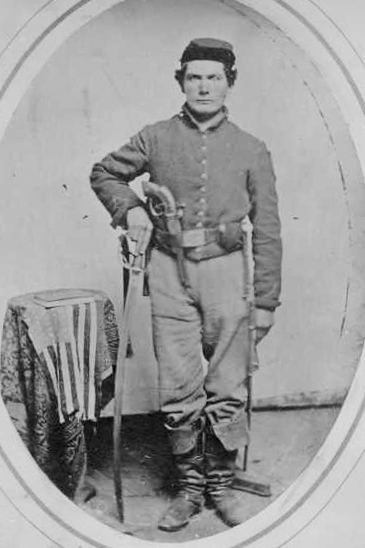
Capt Jenkins Civil WarThe Civil War began on April 12, 1861, when William was eighteen years old. A week and a half later, on April 27, 1861, William enlisted, serving a three-month term with Co. G, 15th Regiment. He then mustered in again as a private in October of 1861 with the Pennsylvania 7th Cavalry, with which he served for the rest of the war. His service record was as follows: Mustered in as private, October 22nd, 1861. Re-enlisted as a veteran, November 1863. Promoted to Corporal, to Second Lieutenant. December 1st, 1864. Mustered in December 18th, 1864, to Captain, July 24th, 1865. Mustered August 10th, 1865. Mustered out with company. Macon, Ga., August 23rd, 1865.  
William Jenkins was eighteen when he began his military career, and twenty-two when the war ended. At some point during or after the war, William married Emma Lewis, whose family had immigrated from England and also moved to St. Clair. Emma’s father was a coal miner, too, and she was listed in the 1860 census as being a seamstress at the age of 16.

While there is little external data for the period immediately following the Civil War for this family, my grandmother’s journal fills the gap. She reports, They made their home in St. Clair and to them were born three children. It was at this time that the West was being opened and the newspapers were headed with “New Gold Mines in  the West,” and “Get Rich Quick in the West.”  As William Jenkins was interested in mining and also to get rich quick, he went to the Tonapah mines in Nevada. The mines looked very successful to him so he sent for his wife and children to come to Nevada to make their home.  Their journey was made by railroads as far as there were railroads, and the rest of the way by stagecoach.  Mrs. Jenkins had heard of the wild West robbers and Indians.  She had a number of gold certificates to bring along and was afraid that she would be robbed of them. After much thinking she sewed them into her baby’s clothes.”

It seems to me that William settled back in St. Clair after the War and they had three children. It is possible that they had been married on one of his furloughs from service. In any case, according to this family history, William and Emma had at least a couple of children before they headed west. The story of Emma sewing the gold bonds into her baby’s clothes suggests that there was at least one child born to them by this point; I wonder if there might have been just one baby who rode the stagecoach with her, or whether she had one or two toddlers in tow as well.

When the family was recorded in the 1870 census, they had settled in Austin, Nevada. (My grandmother’s account above refers to the Tonapah mines, but those were not named and active until about thirty years later.) The census records three family members: William, Emma, and four-month-old Sara Ann, who had been born there in Austin.

What had happened to the other children?

“The town was progressing peacefully until an epidemic of Scarlet Fever swept the country.  There were few doctors and they were many miles from the town.  Many people lost their lives and among them were the three children of Mr. and Mrs. Jenkins. This was a very tragic experience to them and took all of the happiness out of their life for a long time.”  My grandmother goes on to suggest that the reason the family moved to Butte, Montana, was to escape the sadness of the loss of their children.

That may be. I tried for years to get more information on these children–their names, or even simply when they lived. Sometimes I wondered–was this story conflated with that of other pioneer family members?

The 1900 census didn’t shed any additional light. That census was the first which asked women how many children they had borne, and how many of those children were living. The record stated that she had three children, and all were living. This would be Sara (1870), Emma (1874) and Harold (1886).

Then I found the entry for Emma Jenkins in the 1910 census. Her husband had died five years before, and she was living with her son Harold, his wife and young child, and her widowed daughter Sara. Emma’s answer gave me, for the first time, the evidence I was looking for. Number of children: seven. Number living: three.

There they were. No names, no dates, but historical evidence that they had lived and were remembered.

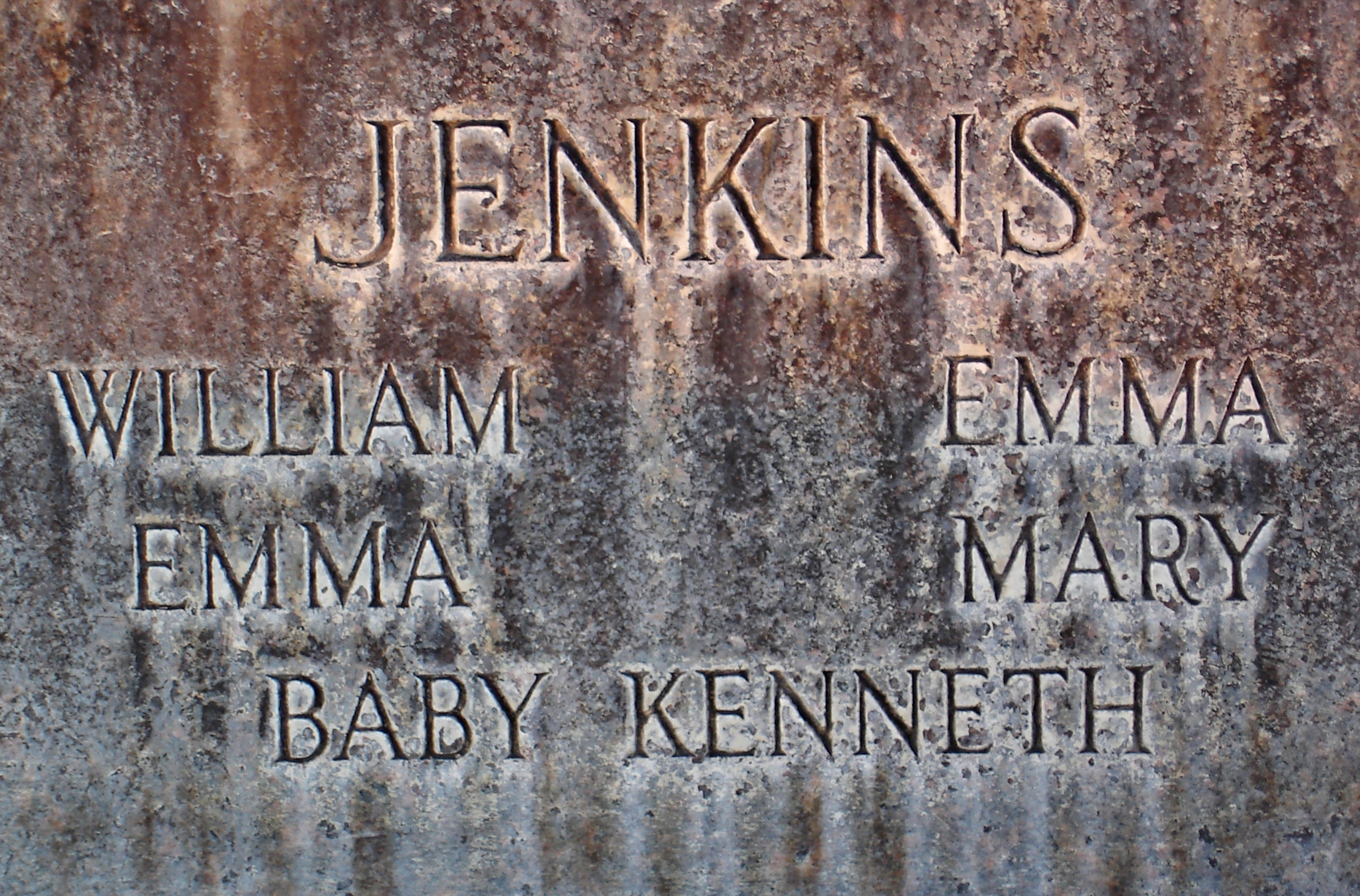
Jenkins headstone

Then I took a closer look at her headstone.

Places for William and Emma.

And then three children: Emma, Mary, and Baby Kenneth.

These are not her grown children. This must be a memorial to the children who were lost: Emma, Mary, and Baby Kenneth.

Somehow, I feel closer to my great, great, great grandmother, knowing that after her husband died, she entered the memory of these little ones into the census record and preserved their names on her tombstone.

Little Soddy on the Prairie

I have been doing more research lately on the lives of my Norwegian ancestors. I happen to be 25% Norwegian, yet I have never had as close a connection to this part of my heritage. So recently I have been examining the lives of these pioneers.

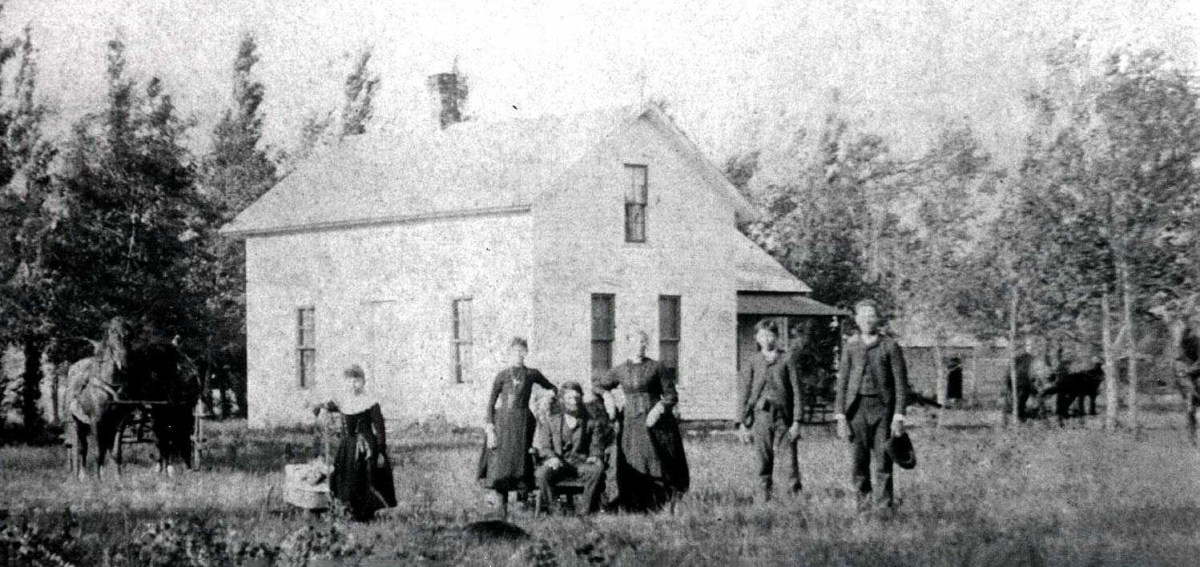
Tollef Tollefson and his wife Anne were born in the 1820’s in Norway, and immigrated to the United States in 1849 after the birth of their first son. After eleven weeks by boat, followed by an overland journey to Wisconsin, Tollef (Ole) and Anne arrived in Spring Valley, Rock County, Wisconsin, August 15, 1849. Their second son, Henry, was born 3 December 1849.  There were seven more children born to the family, all in Wisconsin: Barbra, Martin, Ole, Andrew, Ary, Crist and John. Son Henry married Mary Engen in Wisconsin around 1868; their first son, Sever, was born 16 November 1869.

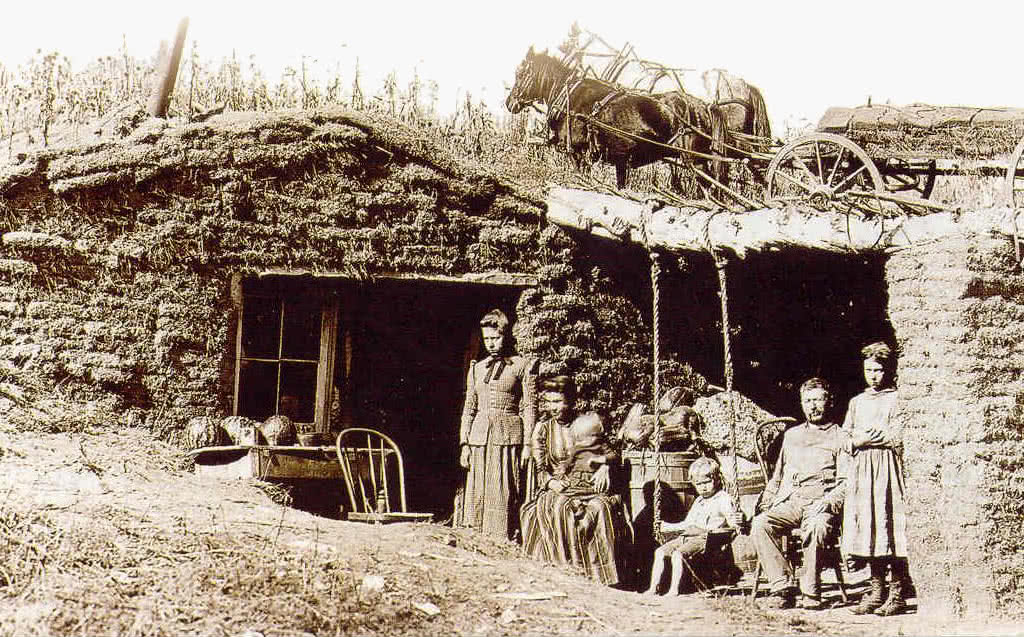
The family’s first home on the prairie was a dugout, similar to the dugout home and stable pictured above. (Photo: Solomon D. Butcher/Library of Congress)

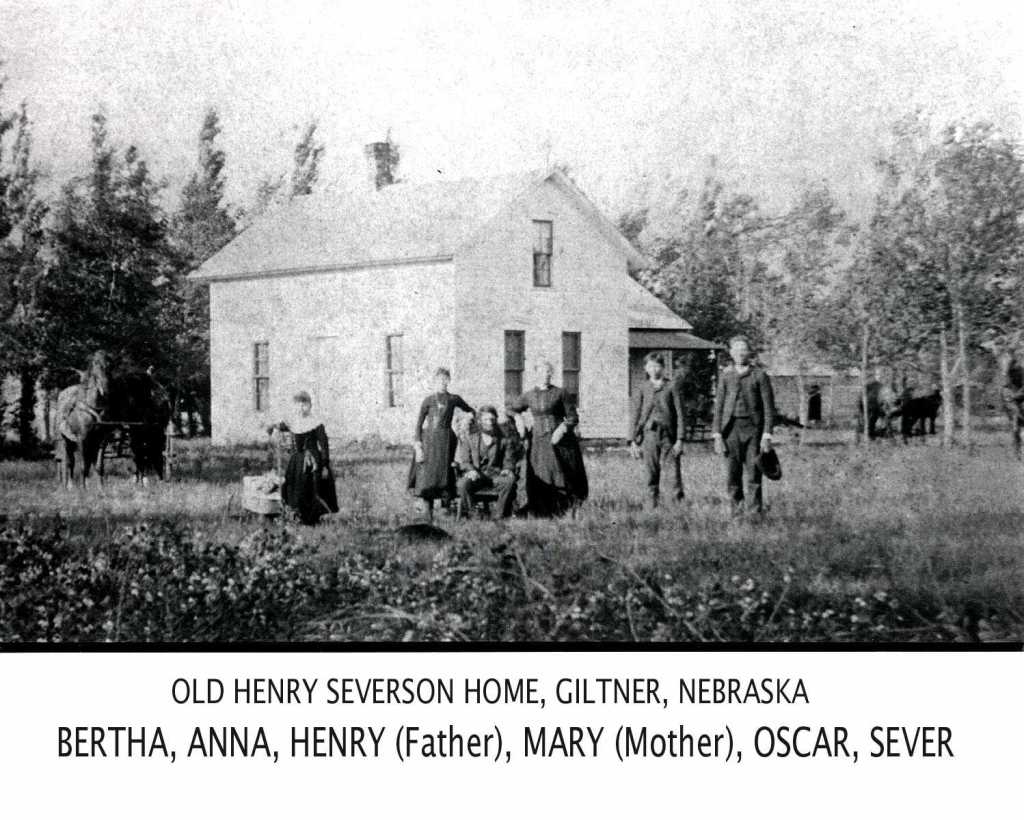
In 1871, Henry Severson moved with his family from Wisconsin to Harvard, Nebraska. According to his daughter, Bertha (Bertie), “In the spring of 1871, they left Wisconsin by covered wagon and ox team for the west–with all their earthly possessions and very little money. When they arrived at a place six miles north of Harvard on a barren prairie they decided this is it.  Their first place of shelter was a dugout back in a bank until Father could break ground with an old breaking plow brought from Wisconsin tied on the wagon.  He built a one- room sod house, laid logs hauled from the river across the top, then sod on top of that for a roof. “

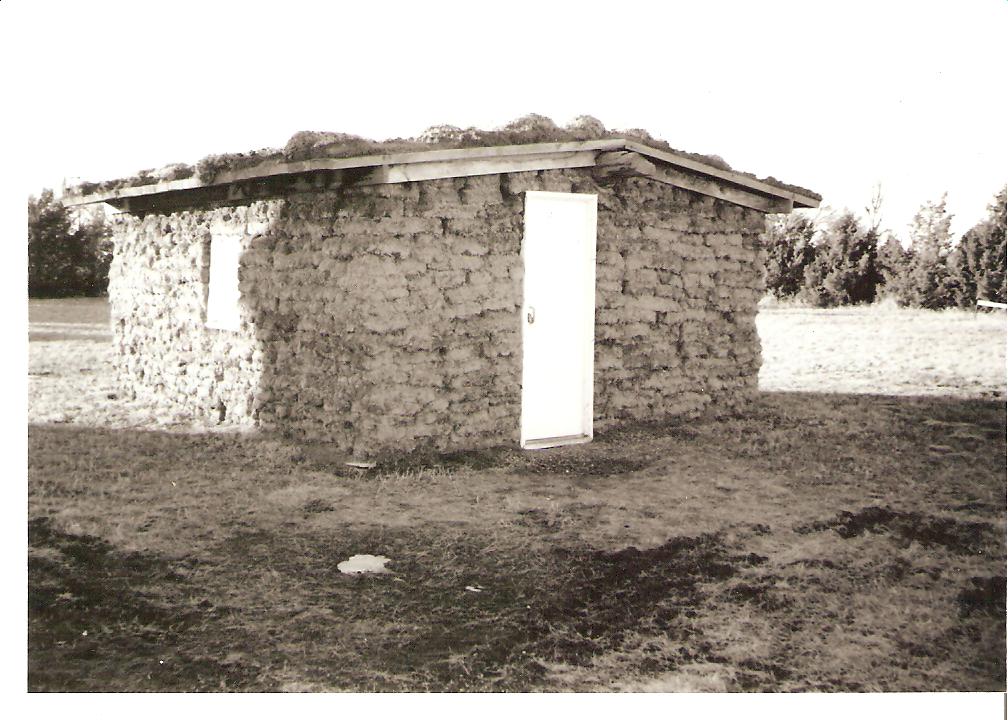
I had always imagined a soddy to be built into the side of a bank or hill, like in Laura Ingalls Wilder’s On the Banks of Plum Creek; but the process of building a soddy involved cutting bricks of sod from the wild prairie, usually 3×4 feet and three inches thick, and then stacking them into a home. There was little timber to be had, and the frame houses couldn’t stand up to the brutal Nebraska winters. The sod houses were warm(-er) in the winter and cool in the summer, and there was no end of material available.

Typical sod house

Bertie notes that the sod house “was where Oscar my next brother was born March 27, 1873; shortly after, while Mother was still in bed, the terrible April storm came, snowed them under and the snow drifted and blew through the roof and down on Mother’s bed.  I shudder when I think of it…” Grandma used to tell this story, handed down from her husband’s family. I can imagine this young woman with a toddler and a newborn baby, huddled on the bed with snow blowing in through every crack.

This storm was one of the worst ever recorded, thereafter known as The Easter Storm, or the Blizzard of 1873. It began on the afternoon of Easter, April 13, and lasted for three days. Snow blew across the prairie like a wall of white. There were no windbreaks yet built, no trees planted to stop the wind, which howled across the prairie and left families buried in their dugouts. Some neighbors were rescued by other pioneer families who only saw a little smoke trailing out of stovepipes sticking up out of the snow. The drifts were 18 to 20 feet in some places, ravines completely filled with snow. Henry, Mary, and their two sons survived the ordeal, and continued to improve their homestead.

The family eventually built a frame house. Sometimes sod was still used as insulation, with siding built around the sod structure. Henry built a frame house for his family before his daughters were born, and Bertie noted, “A part of our old frame house was built before Annie and I were born, so we can’t say we were born in a soddy.”

Summarizing the stories

As I mentioned, I’m working on an illustrated story of Grandma and Grandpa Brown and their lives.  But one much shorter document I have from Grandma Dorothy is one she wrote in 1992 that summarizes some of the stories she told. I thought those who love her like I do would enjoy reading it, so here it is.

“Grandma, tell has what it was like growing up on a farm in Montana.”

This is what I have been hearing over the years from my five granddaughters—who only know city life. They have an idea that it was like “Little House on the Prairie,” I think.

Kristi, our sixteen-year old, gave me a little blank, fabric-covered book for Christmas and asked me to jot down some of my memories. I have been doing that lately. As I was doing this, I came across my old autobiography written in 1935 for an English class. That helped, too.

They liked to hear about the big threshing machine, and what an event that was when it came to our place! They heard about all the cooking my mother had to do for the twenty or so threshers and the many pies and cakes that she baked.

I told them about what happened when my dad butchered a pig and the process that it takes to put pork chops on the table. I also told them how at an early age I would wring the necks of chickens and get them ready to cook; they say “Ugh!” to that.

They heard about our wonderful neighbors and how they helped each other. In the winter time, they would all go to the like and cut enough ice to last all summer and pack it away with saw dust in the ice house.

I told them what it was like to live without electricity and how we heated the irons on the wood stove to iron our clothes (REA changed that). Since she had to have a hot fire, that was the day my mother baked loaves of bread and always a few cinnamon rolls, and the good smells when we came home from school.

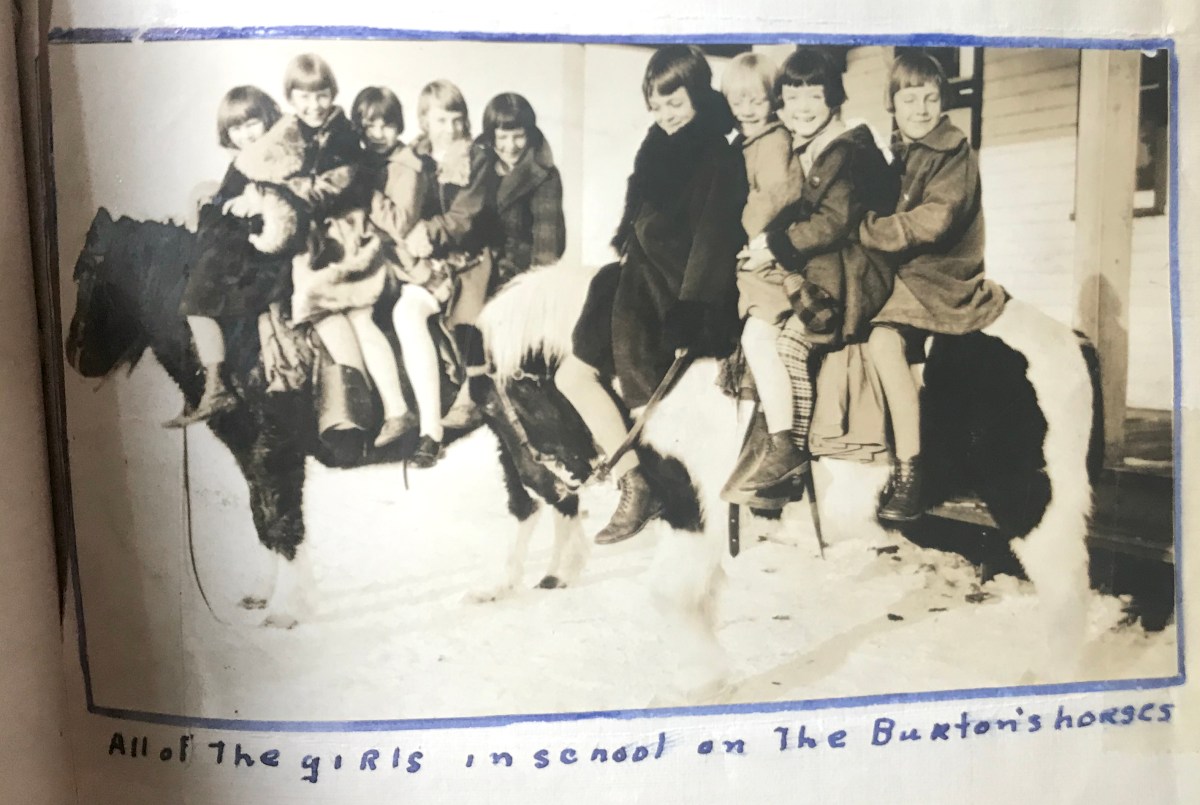
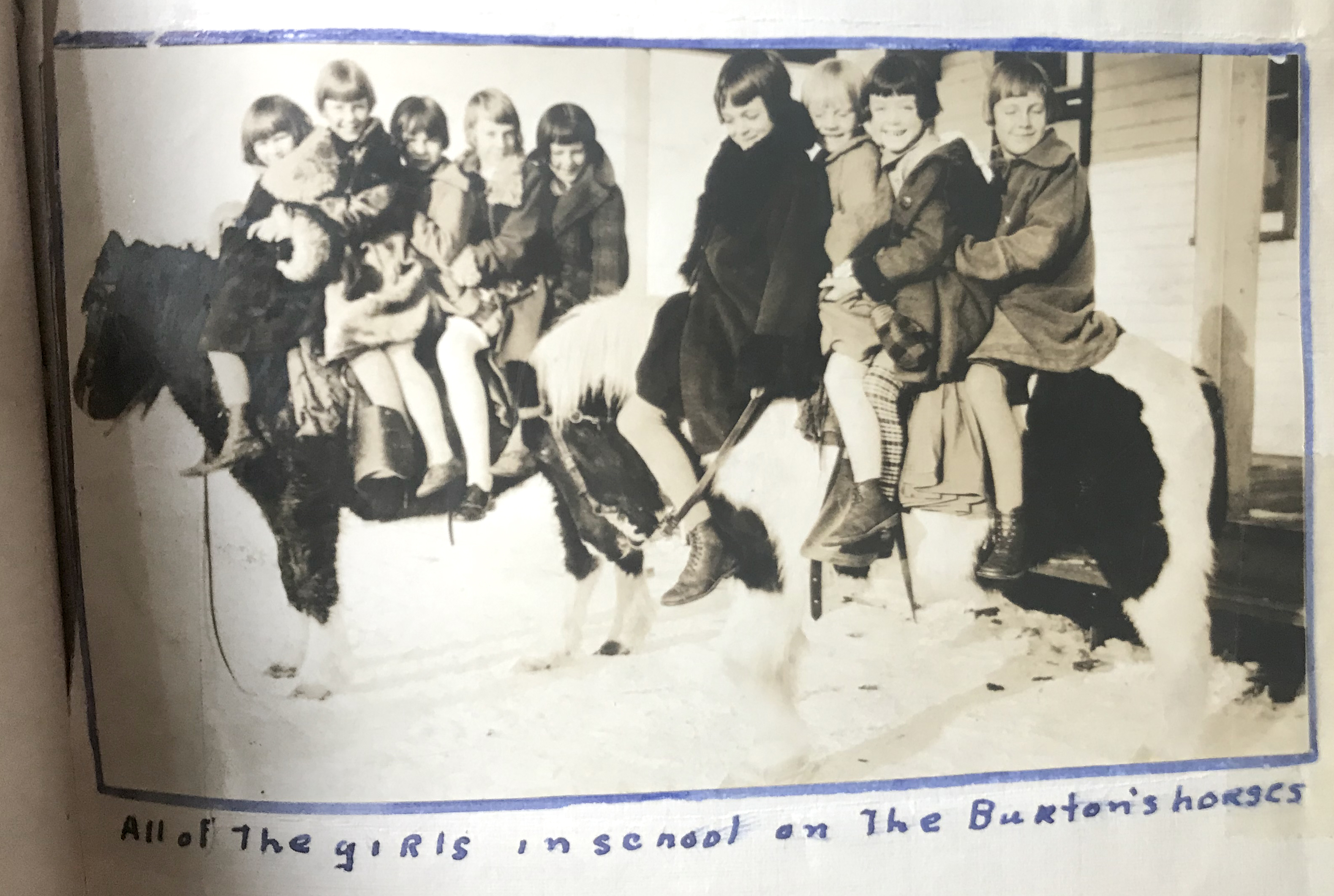
They learned about the little one-room school house where I went to grade school and how the Burton girls rode their Shetland ponies to school.

1925 Dorothy and friends on Burton horses

All of the girls in school on the Burton’s horses

I told them about the new barn that my dad had built and the barn dances that he had before he filled the hay mow with hay. My dad played in a little dance band off and on over the years—so they provided the music. I told them about how we kids went out the next morning and found beer bottles all over the yard where the cars had parked. We hard that “old Lady Fordham” had been selling home brew while the dance was going on. My dad decided he would use those bottles and make a little brew for himself—to have after a hot day in the fields. I remember how scared we kids were since that was against the law!

I told them about my mother who graduated from Flathead High in 1913 and started teaching school when she was 18 for $50 a month. They learned of the fun we had at the country school house dances, where young and old came from miles around and we never missed a dance.

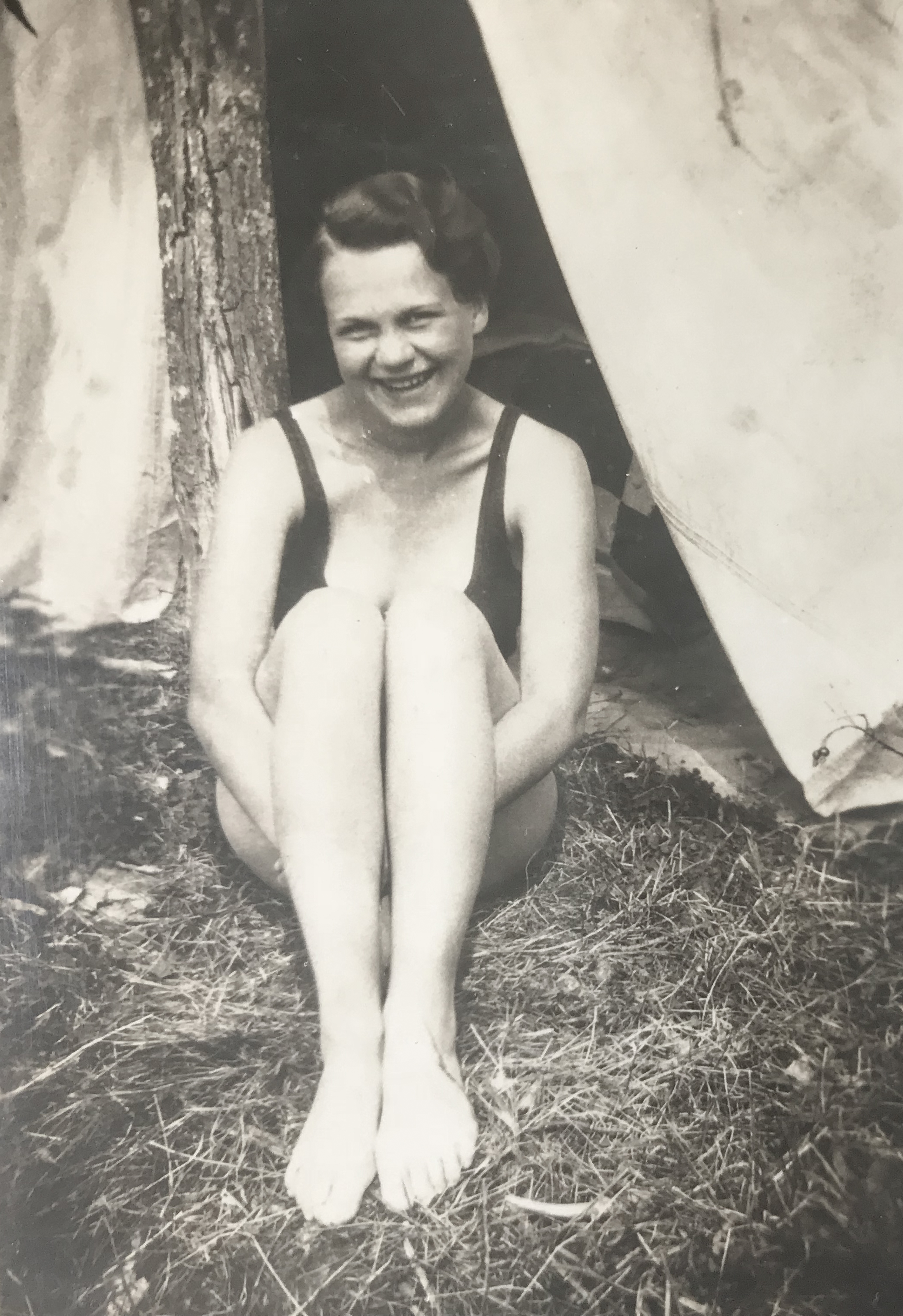
1935 Dorothy campingI told them about Lake Blaine and the big family picnics when we got together with my aunts and uncles and cousins and how some of my girl friends and I went camping there. That was where we all learned to swim and where I had my first boat ride. I told them about the depression.

Finally, I told them about their Grandpa Bill who died when our three sons were 8, 11, and 22. I told them how he traded our new 1939 Nash car for a 1941 Grandpa in the Stearman P-17commercial flying license or 200 hours of flying time. That was what gave us our start and led us out of Montana and eventually to the San Francisco Bay Area where he became an airline pilot and helped to start an airline.
What a fantastic time to have lived! I wonder what kind of stories my granddaughters can possibly tell to their little ones 50 or 60 years from now and what it will take to top this period of time.

Building a timeline

I have been hard at work on a project for several weeks now–establishing a timeline of my grandparents’ lives based on my Grandma Dorothy’s journal. I finished transcribing the journal while I was in California this summer, and then began illustrating it with photos from their lives–which has also meant trying to establish when the various photos were taken.  My dad and I had a chuckle when we discovered that you could often date the photos by the cars in them–the Browns and Gortons did love their cars! My dad’s age is also a good indicator–Baby Jim in the photos in Phoenix or Redlands, a toddler in California, a little older back in Phoenix, a little older in Montana, then back to California. And then there is my grandmother’s writing on the backs of the photos–even a name and a date can place the photo so perfectly in the story.

I suppose that one of the driving factors in this project is the fact that I never knew my Grandpa Brown, who passed away a decade before I was born.  But thanks to this project, I feel like I am getting to know him more and more.

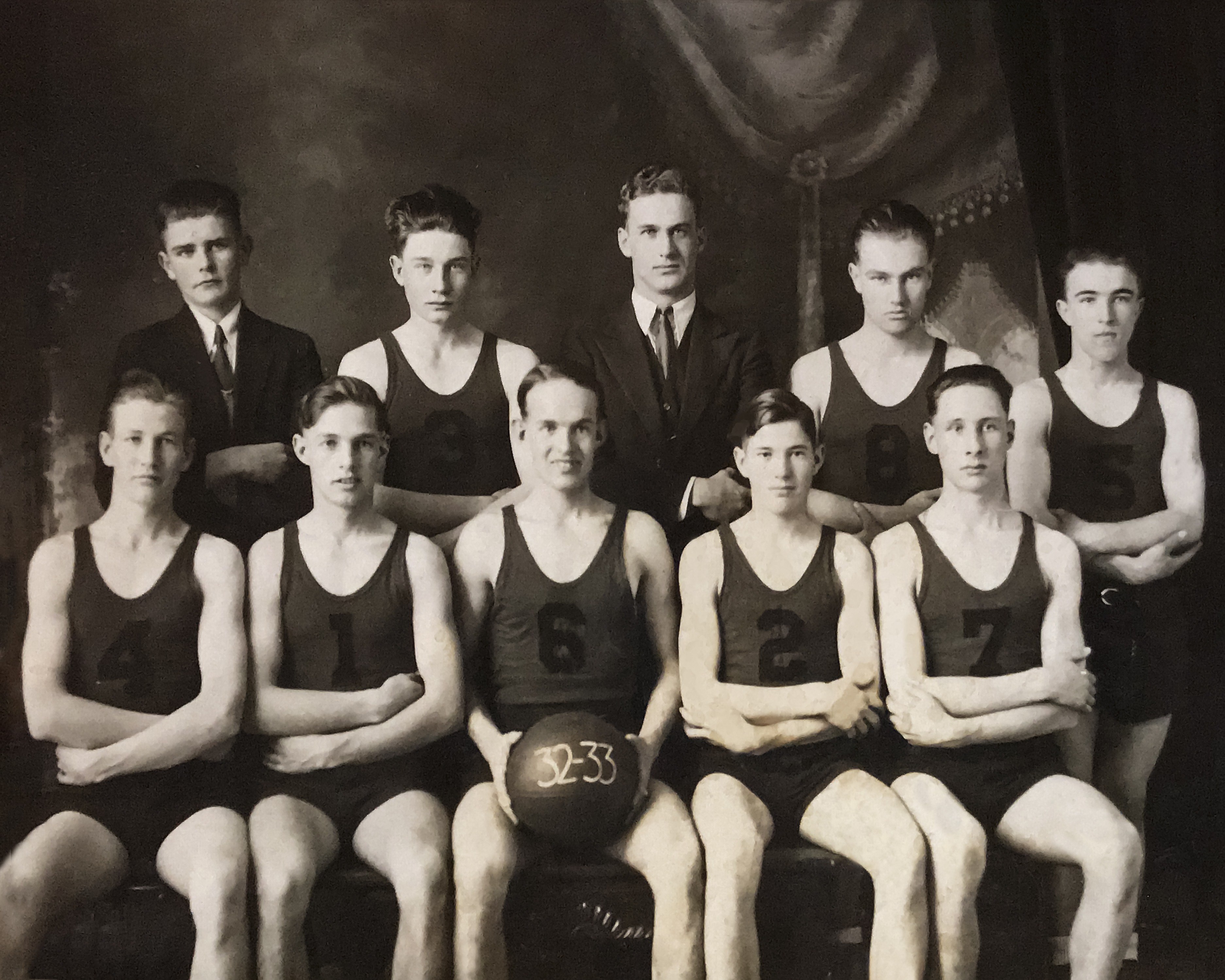
1933 basketball team circle montana

1932-1933 Basketball team, Circle, Montana. Bill Brown is #2, front row

I love this photo of him with his basketball team when he was a senior in high school in Circle, Montana. I can’t get over how much my Uncle Jeff looked like him.

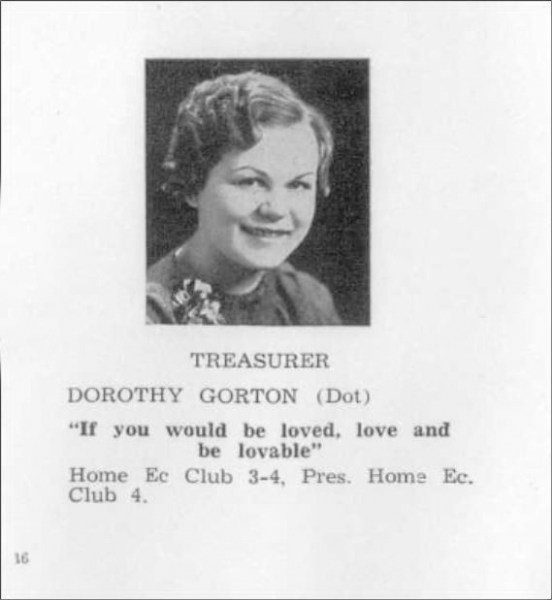
1936 Flathead yearbook Dorothy treasurer

Dorothy Gorton’s Senior Class Officers–she was treasurer. Love her quote, “If you would be loved, love and be loveable.”

And then I look at this photo from my Grandma Dorothy’s senior yearbook (1936), which I found online–and realize that I take after her more and more every day.

Sweet treasures from the past.  Can’t wait to share more of my discoveries.


https://epicureandculture.com/california-farm-stay/

Ambers Brown

My dad, James W. Brown, served as a judge in Santa Barbara for thirteen years. When researching his branch of our family tree, I discovered that he was not the first judge in the family who served the people of California. Ambers Brown, born in Iowa in 1849, became a Justice of the Peace in Tranquility, California, in the beginning years of the twentieth century.

As a family historian, I spend a lot of time attempting to flesh out skeletal stories provided by census data, dates in family Bibles, and the occasional newspaper article. But one of the best finds I ever had was an article tucked into one of my Grandma Dorothy’s journals which provided not only some wonderful details about the life of Ambers Brown, but also a few other clues into the family history.

I’m going to post this glowing article below for the benefit of others researching this branch of the Brown family. The article comes from a book by Paul E. Vandor entitled History of Fresno County, California: With Biographical Sketches … Volume 1. This account provided not only information on Ambers and his wife, Mary Pike, but both of their sets of parents and their places of birth.

Ambers Brown. –The popular and efficient Justice of the Peace of the First Judicial Township of Fresno County, Judge Ambers Brown is an able, conscientious and impartial dispenser of justice, whose wise counsel and advice are eagerly sought by the residents of Tranquility and vicinity.  Judge Brown is a native of the Hawkeye State, born in Washington County, Iowa, June 3, 1849, son of James and Agnes (Johnson) Brown.  His father was a native of Kentucky who moved to Indiana, where he married Agnes Johnson, a native of the Hoosier State, and they migrated to Iowa about 1845 where they were among the early pioneers of Washington County.  The Indians were still to be seen in the country when Mr. Brown located in Iowa.  He improved a farm and followed farming until his death in 1878, and his wife passed away in 1855. [Note that Ambers’ mother died when he was just six years old. His father remarried.] James and Agnes Brown were the parents of three children, Judge Ambers Brown being the only member of the family living.  He remained at the Iowa home until he was twenty-one years of age, when he was united in marriage with Miss Mary Pike, a native of the Buckeye State, born near Columbus, Ohio.  She came with her parents, Jonathan and Louisa (Umbel) Pike, to Iowa.  They were pioneer farmers of the Hawkeye State.

In 1875, Mr. and Mrs. Ambers Brown removed to Hamilton County, Nebr., where they homesteaded eighty acres of land, twelve miles from Aurora, on the Little Blue River. Mr. Brown broke up the virgin prairie soil, and raised corn, wheat and stock, continuing his operations in this locality for about twelve years, when he sold his farm and returned to Fremont County, Iowa, where he followed farming for four years.  In 1891 Ambers Brown decided to migrate to the Golden State, and after arrival in California, he located at Dos Palos, where he purchased twenty acres and improved it by planting alfalfa and fruit trees, and also engaged in dairying.  While living there he was honored by being elected to the office of justice of the peace and also served as school trustee.  In 1910 he sold his ranch and located at Tranquility, Fresno County, where he purchased twenty-two acres.  The land was raw and unimproved, but Mr. Brown soon leveled and checked it, set out an orchard, planted alfalfa, built a residence, engaged in dairying and raising hogs and cattle.

In 1914 he was elected justice of the peace of the First Judicial Township of Fresno County, after which he moved into the town of Tranquility and bought his present home, and has established an office on the same lot, renting his ranch for three years. In 1918 Judge Brown was reelected, evidence of the satisfactory manner in which he had conducted the affairs of his office.  He is also notary public and grain-buyer for Gen. M. W. Muller Company, of Fresno.  Judge and Mrs. Brown are parents of two children: Dennis V., the owner of a ranch at Tranquility; and Robert E. residing in Hamilton County, Nebr., where he is a farmer. [Note: Robert and his wife Anna (Severson) had four sons and one daughter; their youngest son was my grandfather, Jesse Willard Brown.]

Judge and Mrs. Ambers Brown are active members of the Church of Christ and were instrumental in the organization of the congregation at Tranquility, aiding substantially in building the house of worship, the Judge being a member of the building committee and a trustee.  Judge Brown is an exceedingly pleasant and affable man and is highly esteemed in the community.

I am biased, my dad being one of my favorite people anywhere in the world. But I know I am not alone in thinking him also “exceedingly pleasant and affable” and “highly esteemed in the community.” I feel a kinship with his great-grandfather, and look forward to meeting him one day.


Facing mortality

I think one of the most sobering parts of researching family history is seeing the rate of infant, child, and maternal mortality, and thinking about the family implications. It’s true that mortality was a much more common part of life in the seventeenth or eighteenth century; you expected that not all of your children would live to adulthood, and you might not live to a ripe old age. Yet each family had a story, and as I enter in dates and names, I think about them.

Take Anna Goertz Sengel, born in 1681 in Illkirch. She married Diebold Sengel at the age of twenty on 21 February 1702, and they had their first child, Margaretha, on 28 September of 1704; Margaretha died just shy of her fifth birthday on 21 September 1709. Their second daughter Anna was born on 6 February, 1708, and passed away the next day. Their third daughter Maria was born on 20 October, 1711, and died three weeks later. Their fourth child, a son named Diebold, born January 4, 1713, was their only child to survive to adulthood (my 6-great grandfather). Fifth child Catharina was born on 24 February, 1717; she died at the age of seven. Sixth child, Anna, was born 24 February 1720, and outlived her mother, the only one of the daughters to do so; even so, she died when she was nine. Seventh child Maria was born 20 September 1722 and died on 3 December of the same year, and their final child, Salome, was born on 10 August 1724, and died on the same day as her mother Anna, 5 October, 1724, three weeks after seven-year-old Catharina.  A whooping cough epidemic in Alsace in 1724 may be to blame for the death of mother and these two children, though the family was clearly plagued by ill health in general, losing seven of their eight children between 1704 and 1729.

Diebold took a second wife a year later, marrying Anna Michel on 13 May 1725, but he died on 1 March, 1726, leaving his wife pregnant with twin boys who were born on the first of September. One of the boys, Johannes Georg, died before his second birthday, but the other twin, Johann Michael, lived until the relatively advanced age of 59.  Thus of the ten children of Diebold Stengel, only two survived to adulthood: my 6-great grandfather Diebold, and his half-brother Johann Michael.

The next generation faced similar tragedy. Diebold was a fisherman, and he married Barbara Mursch on 12 March 1737. Their son Diebold was born 28 September 1738; he died just before his fifth birthday. Their second son, Georg, only lived three years. But their daughter Anna, my 5-great grandmother, was born 1 April 1748 and lived until she was seventy-three.

Diebold’s half-brother, Johann Michael, became a cooper and innkeeper at “The Swan” in Illkirch (Cygne).  His first wife was Margaretha Steuer; their son Johann Michael was born 27 April, 1749.  She died when their son was only six months old; he married again, but he and his second wife, Barbara Walther, had three sons who did not live past their second birthday. So, of this generation, only two of the seven children survived to adulthood.

Johann Michael’s only living son, Johann Michael II, went on to accomplish a great deal in his life: he was a cooper; he continued his father’s role as the innkeeper of The Swan; he was the mayor of Illkirch from 1790-1793, and he was the Chief Commissioner in Geispolsheim.  He married Anna Maria Goertz around 1767 and they had four sons and one daughter.  But the same infant mortality seen in the previous generation continued: his first son, Johann Michael, died before his second birthday. Happily, their daughter, Anna Maria, lived a relatively long life (1771-1822). Their third child, also named Johann Michael, lived only two weeks. Their fourth child, the third Johann Michael, lived to adulthood and continued the tradition of being the innkeeper of The Swan.  Their fifth child also lived to adulthood; he was named Johann Georg, after his grandfather’s twin brother, and lived as a farmer in Illkirch.

Similarly, Diebold’s daughter Anna, my 5-great grandmother, bore six children and saw four of them survive to adulthood.  Andreas (1767-aft. 1798) became a fisherman and innkeeper and had four children; Diebold died at age 5; Anna (1773-1835) married and had one son; Diebold (1777-1851, my 4-great grandfather) was a day laborer and saw six of his eight children live to adulthood; Anna Maria died at the age of eight; and Margaretha (1782-1826) married and had five children. Only one, however, lived to be an adult.

I am not sure whether there was a particular genetic trait that wreaked havoc with these families, or whether it was simply living in a time of disease, war, and hardship. As I research other branches of the family, I’m sure I’ll have a better sense. But as I read through the names and saw infant siblings and uncles and aunts remembered by surviving family members, it seemed to me that, regardless of the common nature of infant mortality, each child was still mourned and remembered. It makes me feel humbled to think of how many times my ancestors were one of only one or two surviving children; humbled, and grateful.

Alsace

When my great-grandfather met a charming young woman at the opera and borrowed her opera glasses, I wonder if he knew what a departure he was about to take from generations of tradition.

Frédéric Auguste was born in Illkirch, a town in Alsace near Strasbourg, on August 28, 1882.  His beloved Toni–born Theresia Antoinette Lordemann–was born on April 7, 1880, just outside of Münster in Germany. That they met at the opera in New York City and married and lived their lives does not seem particularly remarkable in our American melting pot. But for Alsatians at the turn of the twentieth century, it was troubling at best.67995_10151121095161776_594960160_n (1)

In his 1918 book Alsace-Lorraine, George W. Edwards noted, “Should an Alsatian girl so far forget her vows as to espouse a German, henceforth she was disowned by her own people, and considered as one dead. Thus society dealt with the invader in the two inseparable provinces of Alsace-Lorraine.” I suppose that if that Alsatian girl–or boy–left for the New World and was rarely seen again, the effect on her would be lessened, but this quote certainly reflects the depth of antagonism between Alsace and Germany.

What was the source of this deep animosity?  In 1871–only a decade before Gus’ birth– Germany (Prussia) had siezed Alsace and Lorraine.  The next fifty years saw what Alsatians considered to be an unending occupation of their country by “invaders.” Considering that the Rhine had historically been the border between Germany and France, and noting also that this area was long ago settled by Gallo-Romans and not Teutonic peoples, it seems logical that the area in question should be considered more French than German. That was indeed the feeling of the native Alsatians, who saw the Germans only as an occupying force.

All of this got me thinking about August’s Alsatian background. My grandmother was very much aware of her Alsatian heritage, and grew up speaking her father’s French as well as her mother’s German. (And English, once she started kindergarten.)

So, I began to research the family line of August Fels.

And I hit a treasure trove!

28029_10151121095466776_678029077_n (2)

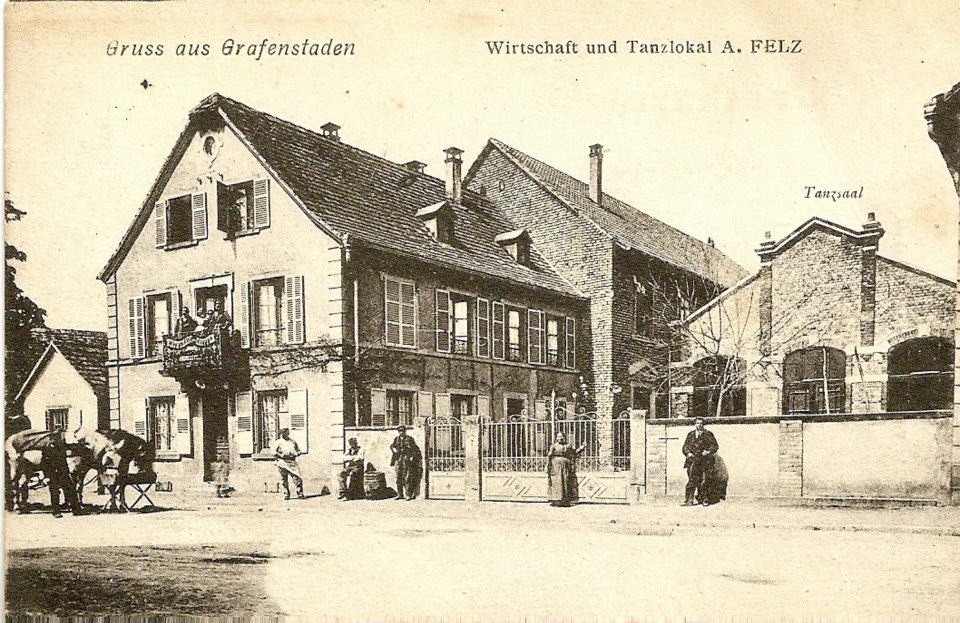
The family inn in Grafenstaden

It turns out that a French historian by the name of Damien Bilteryst has done extensive research on this family tree.  I began adding the names to my own tree on Ancestry.com, and was amazed to see the family living in the same little town, Illkirch, all the way back to the 1500’s and beyond. Generations being born, living, marrying, and dying in this picturesque spot on the Ill River. Many fishermen, as well as churchwardens, farmers, straw-cutters, bakers, innkeepers and others. Even a mayor or two.


Some of the earliest in the family lines had their marriages recorded: for example, Jacob Haffner and Maria Heyger, married on 9 February, 1623. He was a weaver.  Maria’s father–my 11-great grandfather–was a baker there in the little town of Illkirch. I love that, because my great-grandfather was also a baker, and a chef, and that was part of what drove him to the new world.  Another baker in the family tree was Mr. Roesch, my 12-great grandfather born around 1510, who was a “Boulanger de pain blanc”–a baker of white bread.  I am currently doing a bit more research on this designation, knowing that there were strict rules governing which bakers could bake which types of bread at various points in history. Another baker was another 11-great grandfather, Wendling Meykuchel, born in 1545. One of his sons, Diebold Meykuchel, born around 1570, was a baker and innkeeper; his other son, Hans Meykuchel, my 10-great grandfather born around 1580, was a “Weißbeck,” a “fancy baker” or confectioner.

The earliest “Fels” ancestor I have traced thus far is Claus Veltz, born around 1547 in Illkirch. (The name changed spelling from Veltz to Fels only a generation or two before my great grandfather, as seen below.) Claus married Susanna Fischer on February 4, 1572, and they had at least three children: Catharina, Sebastian (Nov. 10, 1583- Feb. 3, 1645), and Johannes. Sebastian was my 10-great grandfather, a “bourgeois et pêcheur,” or person living in a town and fisherman.

It is rather amazing to trace the lineage of this one branch of the family tree, and see it going back over ten generations in one town in the banks of the Ill:

Claus VELTZ (Fels) (1547 – 1587)
Sebastian VELTZ (1583 – 1645)
son of Claus VELTZ (Fels)
Michael VELTZ (1624 – 1693)
son of Sebastian VELTZ
Elisabeth VELTZ (1678 – 1732)
daughter of Michael VELTZ
Barbara Mursch (1715 – 1771)
daughter of Elisabeth VELTZ
Anna Sengel (1748 – 1822)
daughter of Barbara Mursch
Georges Andres Fels (1817 – 1898)
son of Diebold Thiebault VELTZ (Fels)
Andreas “Andre” Fels (1848 – 1922)
son of Georges Andres Fels


The Fels line weaves in and out of other family lines–Murch, Sengel, Erb, Meykuchel, Schertzer, and others–but it is still striking to see the generations continuing one after another in the same place, and even to this day among the cousins. August would have inherited his family’s land and businesses there in Illkirch, but his round-the-world trip with its unexpected terminus in New York City changed the course of our family history.

So many more stories to tell.

.


The Chef

1240154_10151581028941776_1136157854_n.jpg

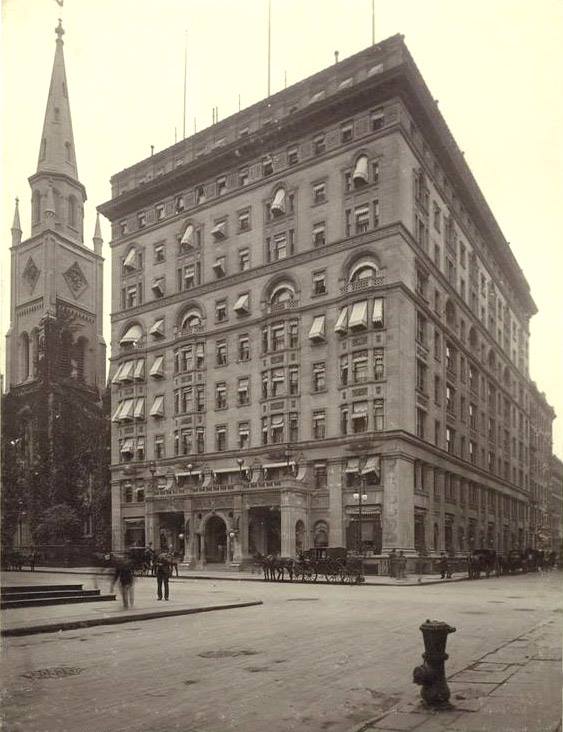
The Holland House Hotel, 30th and 5th

My Grandma Harley told me many stories of her parents.  Her father, Frederich August Fels arrived in New York City on May 6, 1906, on the Philadelphia. The passenger list indicated that he was headed to work at the Holland House Hotel at 30th and 5th Avenue, one of the finest hotels of the day.


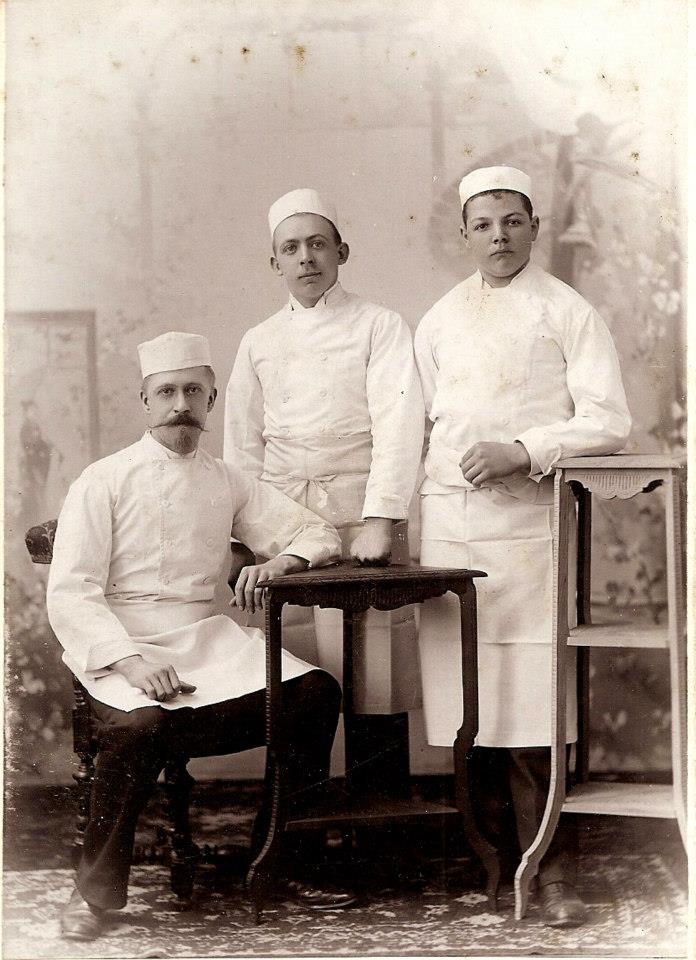
Trained in Paris, Gus was a fine chef, and his plan was to tour the world before settling down to take over the family hotel and restaurant in Graffenstaden.  His plans changed, however, when he met Antoinette Lordemann at the opera one evening. He asked to borrow her opera glasses; they married on October 4, 1910.


The Holland House Hotel closed in 1920. Prohibition had an unintented consequence for the hotels and restaurants of New York; without wine lists and the income from other alcoholic beverages, they went under.  Gus was no longer working at the Holland House when it closed; by 1915, he was listed in the census as the head of the household at 402 8th Avenue, a three-story building with a restaurant and bar on the first floor. The other members of the household were Toni and their daughter Henrietta (Rita), my grandmother, who had been born December 9, 1911. The rest of the house was rented to ten roomers, many of whom were possibly employed by Gus: four waiters, a cook, a kitchenman, and a porter. (There were also a lawyer, a machinist, and a driver rounding out the boarders.)

At some point between 1916, when Rita’s brother Frederich was born in New York City, and 1920 when the Federal Census lists them at the home on Somerset Street in Philadelphia, Gus’ business failed. I have heard it said that he was too trusting, got into trouble with creditors, and fled to Philadelphia to start over. I am curious what role WWI and Prohibition might have played in its downfall, if any. Gus, in his mid-thirties, did not fight in WWI; being German and French, the family worked hard to prove their patriotism in their new home in Philadelphia. They had been American citizens for years; young Fritz became Fred only, and Rita spoke English in her new Kindergarten.

More to come…