From the Coal Mine to the Silver Mines

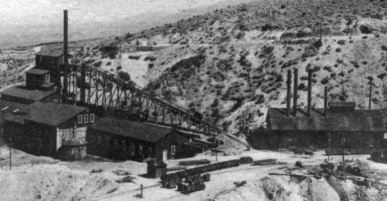
Austin Silver Mine

I was watching a show on Netflix the other day–Ghost Town Gold, in which two guys visit the kinds of ghost towns my family poked around in on vacations. But instead of looking for cool rocks like we did, they go into old barns and buildings and come out with fabulous historical artifacts. In this particular episode (Season 1, Episode 1, around the 30 minute mark), the two hosts explored the town of Austin, Nevada.

Austin rang a bell. Was that where my 3x- Great Grandfather had mined silver? I pulled up the family tree.

But first, a little back story.

On April 12, 1852, nine-year-old William Jenkins arrived in the harbor of New York City on the ship Pathfinder. His family, including his parents William and Elizabeth, brother John (age 14), and sister Anna (age 3), had moved from Wales to seek new opportunities. In her family history, my grandmother recorded: “They settled in St. Clair, Pennsylvania, where his parents lived for the rest of their lives.  His father, William Jenkins, St., died soon after they settled in Pennsylvania, but his mother lived until after she was ninety years old.  She lived in a little white house by herself and always kept a white pig.  She was a very clean old lady and always gave the pig a scrubbing every Saturday.” This last detail is all the more significant when you realize that St. Clair was a coal mining town, and that spotless old lady was a coal miner’s wife.
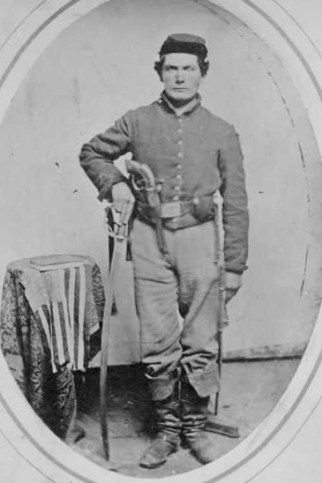
Capt Jenkins Civil WarThe Civil War began on April 12, 1861, when William was eighteen years old. A week and a half later, on April 27, 1861, William enlisted, serving a three-month term with Co. G, 15th Regiment. He then mustered in again as a private in October of 1861 with the Pennsylvania 7th Cavalry, with which he served for the rest of the war. His service record was as follows: Mustered in as private, October 22nd, 1861. Re-enlisted as a veteran, November 1863. Promoted to Corporal, to Second Lieutenant. December 1st, 1864. Mustered in December 18th, 1864, to Captain, July 24th, 1865. Mustered August 10th, 1865. Mustered out with company. Macon, Ga., August 23rd, 1865.  

William Jenkins was eighteen when he began his military career, and twenty-two when the war ended. At some point during or after the war, William married Emma Lewis, whose family had immigrated from England and also moved to St. Clair. Emma’s father was a coal miner, too, and she was listed in the 1860 census as being a seamstress at the age of 16.

While there is little external data for the period immediately following the Civil War for this family, my grandmother’s journal fills the gap. She reports, They made their home in St. Clair and to them were born three children. It was at this time that the West was being opened and the newspapers were headed with “New Gold Mines in  the West,” and “Get Rich Quick in the West.”  As William Jenkins was interested in mining and also to get rich quick, he went to the Tonapah mines in Nevada. The mines looked very successful to him so he sent for his wife and children to come to Nevada to make their home.  Their journey was made by railroads as far as there were railroads, and the rest of the way by stagecoach.  Mrs. Jenkins had heard of the wild West robbers and Indians.  She had a number of gold certificates to bring along and was afraid that she would be robbed of them. After much thinking she sewed them into her baby’s clothes.”

It seems to me that William settled back in St. Clair after the War and they had three children. It is possible that they had been married on one of his furloughs from service. In any case, according to this family history, William and Emma had at least a couple of children before they headed west. The story of Emma sewing the gold bonds into her baby’s clothes suggests that there was at least one child born to them by this point; I wonder if there might have been just one baby who rode the stagecoach with her, or whether she had one or two toddlers in tow as well.

When the family was recorded in the 1870 census, they had settled in Austin, Nevada. (My grandmother’s account above refers to the Tonapah mines, but those were not named and active until about thirty years later.) The census records three family members: William, Emma, and four-month-old Sara Ann, who had been born there in Austin.

What had happened to the other children?

“The town was progressing peacefully until an epidemic of Scarlet Fever swept the country.  There were few doctors and they were many miles from the town.  Many people lost their lives and among them were the three children of Mr. and Mrs. Jenkins. This was a very tragic experience to them and took all of the happiness out of their life for a long time.”  My grandmother goes on to suggest that the reason the family moved to Butte, Montana, was to escape the sadness of the loss of their children.

That may be. I tried for years to get more information on these children–their names, or even simply when they lived. Sometimes I wondered–was this story conflated with that of other pioneer family members?

The 1900 census didn’t shed any additional light. That census was the first which asked women how many children they had borne, and how many of those children were living. The record stated that she had three children, and all were living. This would be Sara (1870), Emma (1874) and Harold (1886).

Then I found the entry for Emma Jenkins in the 1910 census. Her husband had died five years before, and she was living with her son Harold, his wife and young child, and her widowed daughter Sara. Emma’s answer gave me, for the first time, the evidence I was looking for. Number of children: seven. Number living: three.

There they were. No names, no dates, but historical evidence that they had lived and were remembered.
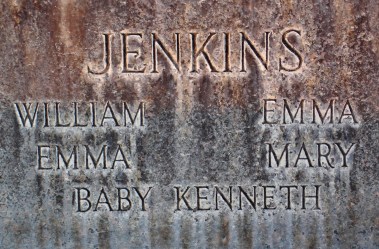
Jenkins headstone

Then I took a closer look at her headstone.

Places for William and Emma.

And then three children: Emma, Mary, and Baby Kenneth.

These are not her grown children. This must be a memorial to the children who were lost: Emma, Mary, and Baby Kenneth.

Somehow, I feel closer to my great, great, great grandmother, knowing that after her husband died, she entered the memory of these little ones into the census record and preserved their names on her tombstone.
Little Soddy on the Prairie

I have been doing more research lately on the lives of my Norwegian ancestors. I happen to be 25% Norwegian, yet I have never had as close a connection to this part of my heritage. So recently I have been examining the lives of these pioneers.

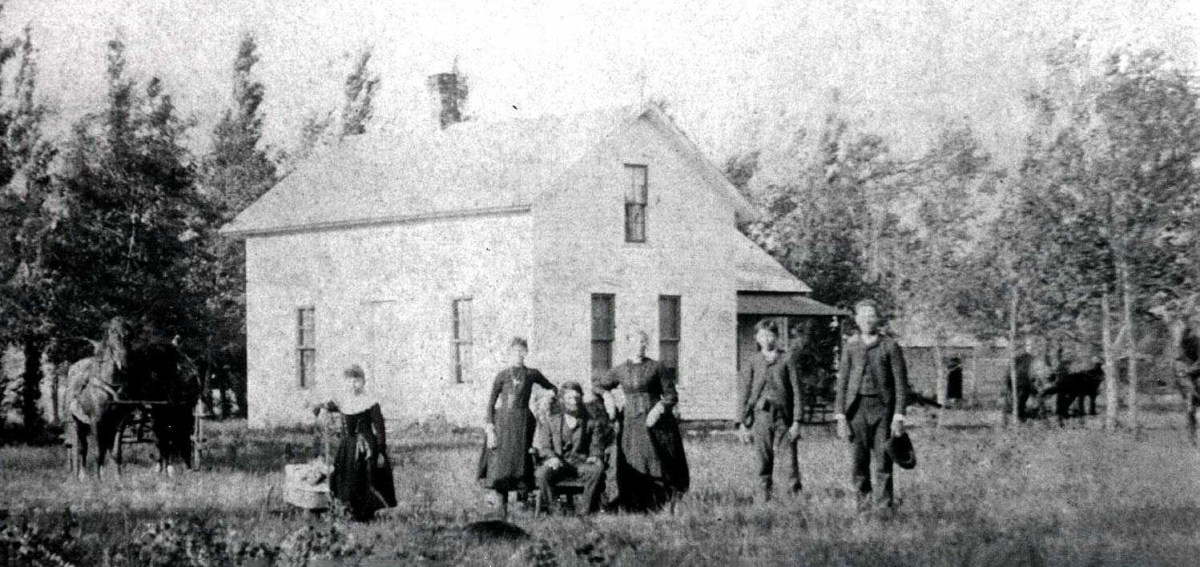
Tollef Tollefson and his wife Anne were born in the 1820’s in Norway, and immigrated to the United States in 1849 after the birth of their first son. After eleven weeks by boat, followed by an overland journey to Wisconsin, Tollef (Ole) and Anne arrived in Spring Valley, Rock County, Wisconsin, August 15, 1849. Their second son, Henry, was born 3 December 1849.  There were seven more children born to the family, all in Wisconsin: Barbra, Martin, Ole, Andrew, Ary, Crist and John. Son Henry married Mary Engen in Wisconsin around 1868; their first son, Sever, was born 16 November 1869.

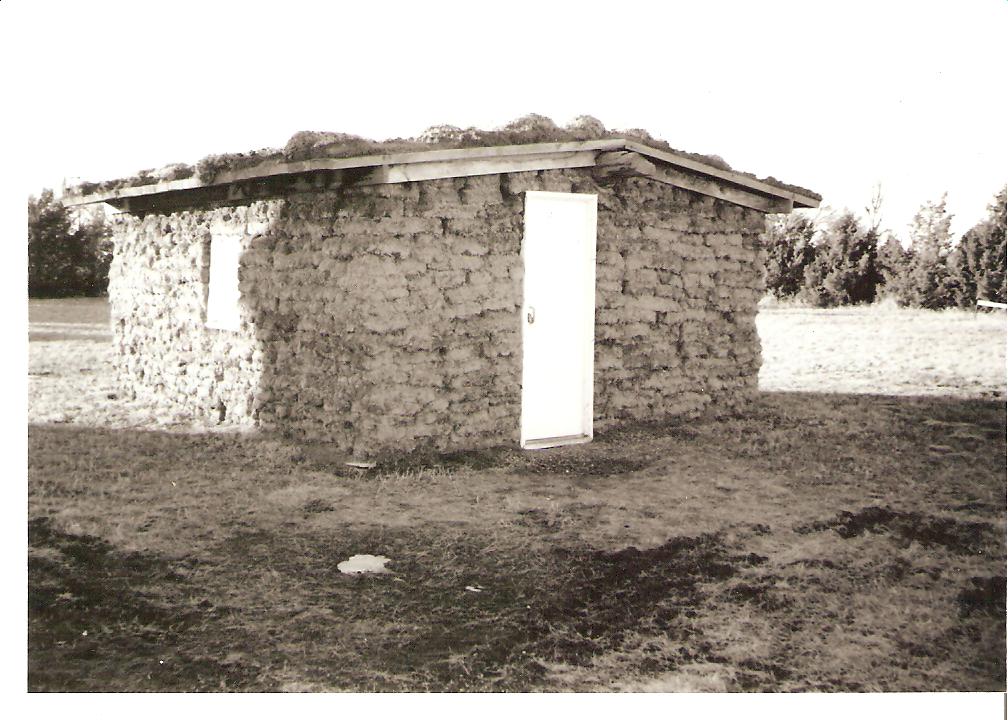
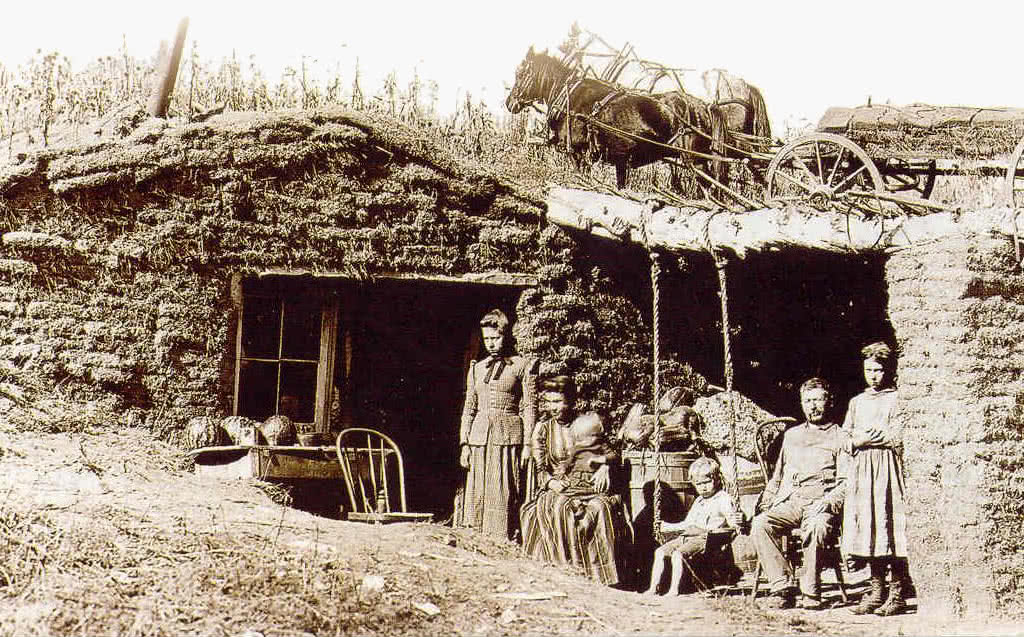
The family’s first home on the prairie was a dugout, similar to the dugout home and stable pictured above. (Photo: Solomon D. Butcher/Library of Congress)

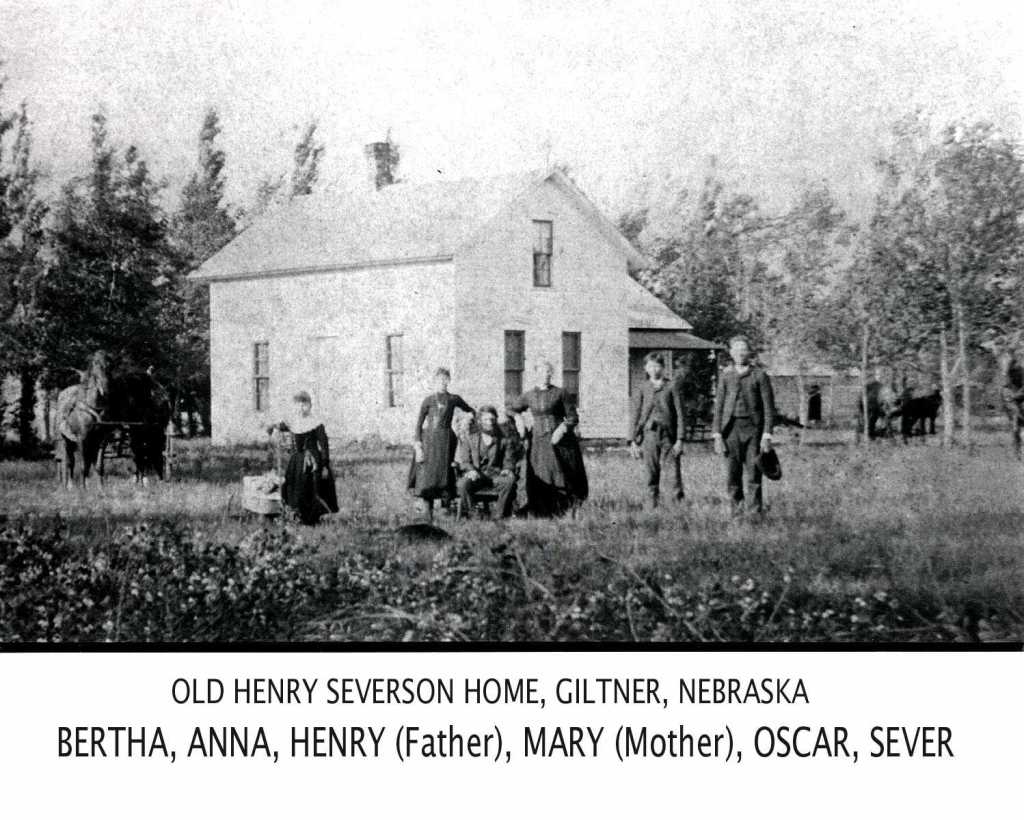
In 1871, Henry Severson moved with his family from Wisconsin to Harvard, Nebraska. According to his daughter, Bertha (Bertie), “In the spring of 1871, they left Wisconsin by covered wagon and ox team for the west–with all their earthly possessions and very little money. When they arrived at a place six miles north of Harvard on a barren prairie they decided this is it.  Their first place of shelter was a dugout back in a bank until Father could break ground with an old breaking plow brought from Wisconsin tied on the wagon.  He built a one- room sod house, laid logs hauled from the river across the top, then sod on top of that for a roof. “

I had always imagined a soddy to be built into the side of a bank or hill, like in Laura Ingalls Wilder’s On the Banks of Plum Creek; but the process of building a soddy involved cutting bricks of sod from the wild prairie, usually 3×4 feet and three inches thick, and then stacking them into a home. There was little timber to be had, and the frame houses couldn’t stand up to the brutal Nebraska winters. The sod houses were warm(-er) in the winter and cool in the summer, and there was no end of material available.

Typical sod house

Bertie notes that the sod house “was where Oscar my next brother was born March 27, 1873; shortly after, while Mother was still in bed, the terrible April storm came, snowed them under and the snow drifted and blew through the roof and down on Mother’s bed.  I shudder when I think of it…” Grandma used to tell this story, handed down from her husband’s family. I can imagine this young woman with a toddler and a newborn baby, huddled on the bed with snow blowing in through every crack.

This storm was one of the worst ever recorded, thereafter known as The Easter Storm, or the Blizzard of 1873. It began on the afternoon of Easter, April 13, and lasted for three days. Snow blew across the prairie like a wall of white. There were no windbreaks yet built, no trees planted to stop the wind, which howled across the prairie and left families buried in their dugouts. Some neighbors were rescued by other pioneer families who only saw a little smoke trailing out of stovepipes sticking up out of the snow. The drifts were 18 to 20 feet in some places, ravines completely filled with snow. Henry, Mary, and their two sons survived the ordeal, and continued to improve their homestead.

The family eventually built a frame house. Sometimes sod was still used as insulation, with siding built around the sod structure. Henry built a frame house for his family before his daughters were born, and Bertie noted, “A part of our old frame house was built before Annie and I were born, so we can’t say we were born in a soddy.”

Summarizing the stories

As I mentioned, I’m working on an illustrated story of Grandma and Grandpa Brown and their lives.  But one much shorter document I have from Grandma Dorothy is one she wrote in 1992 that summarizes some of the stories she told. I thought those who love her like I do would enjoy reading it, so here it is.

“Grandma, tell has what it was like growing up on a farm in Montana.”

This is what I have been hearing over the years from my five granddaughters—who only know city life. They have an idea that it was like “Little House on the Prairie,” I think.

Kristi, our sixteen-year old, gave me a little blank, fabric-covered book for Christmas and asked me to jot down some of my memories. I have been doing that lately. As I was doing this, I came across my old autobiography written in 1935 for an English class. That helped, too.

They liked to hear about the big threshing machine, and what an event that was when it came to our place! They heard about all the cooking my mother had to do for the twenty or so threshers and the many pies and cakes that she baked.

I told them about what happened when my dad butchered a pig and the process that it takes to put pork chops on the table. I also told them how at an early age I would wring the necks of chickens and get them ready to cook; they say “Ugh!” to that.

They heard about our wonderful neighbors and how they helped each other. In the winter time, they would all go to the like and cut enough ice to last all summer and pack it away with saw dust in the ice house.

I told them what it was like to live without electricity and how we heated the irons on the wood stove to iron our clothes (REA changed that). Since she had to have a hot fire, that was the day my mother baked loaves of bread and always a few cinnamon rolls, and the good smells when we came home from school.

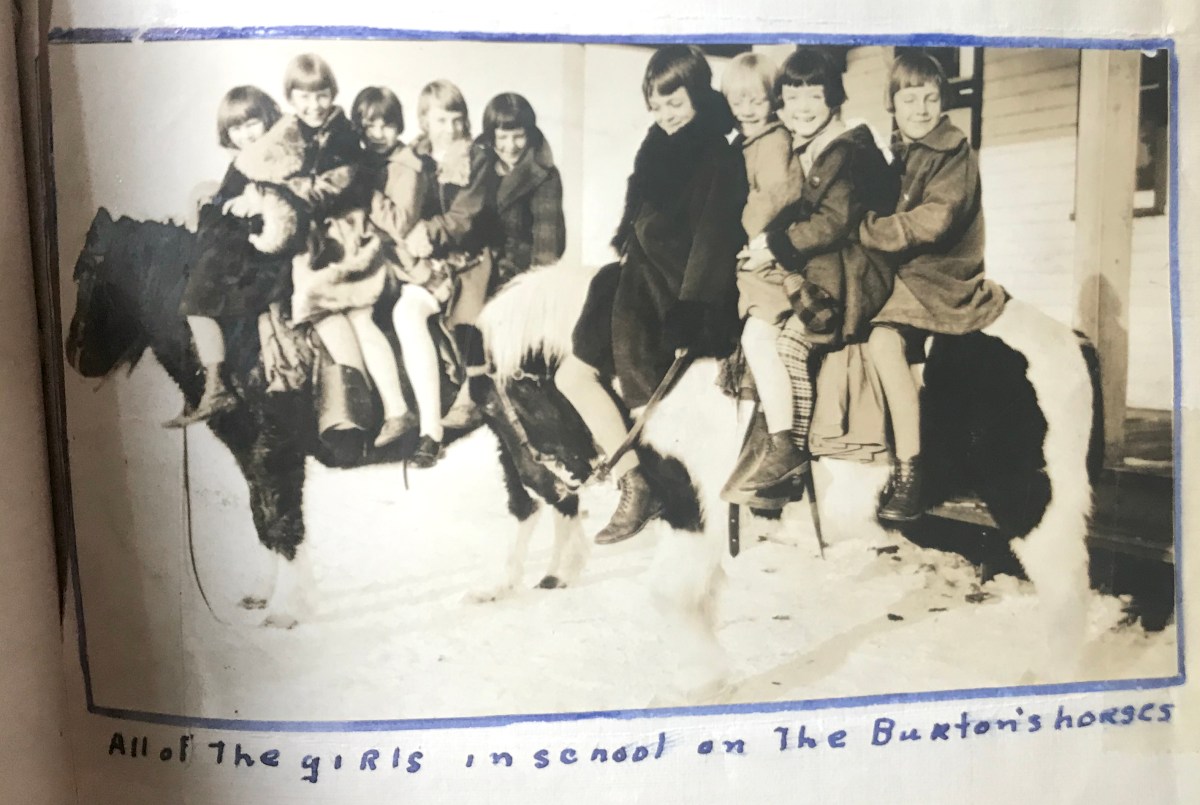
They learned about the little one-room school house where I went to grade school and how the Burton girls rode their Shetland ponies to school.

1925 Dorothy and friends on Burton horses

All of the girls in school on the Burton’s horses

I told them about the new barn that my dad had built and the barn dances that he had before he filled the hay mow with hay. My dad played in a little dance band off and on over the years—so they provided the music. I told them about how we kids went out the next morning and found beer bottles all over the yard where the cars had parked. We hard that “old Lady Fordham” had been selling home brew while the dance was going on. My dad decided he would use those bottles and make a little brew for himself—to have after a hot day in the fields. I remember how scared we kids were since that was against the law!

I told them about my mother who graduated from Flathead High in 1913 and started teaching school when she was 18 for $50 a month. They learned of the fun we had at the country school house dances, where young and old came from miles around and we never missed a dance.

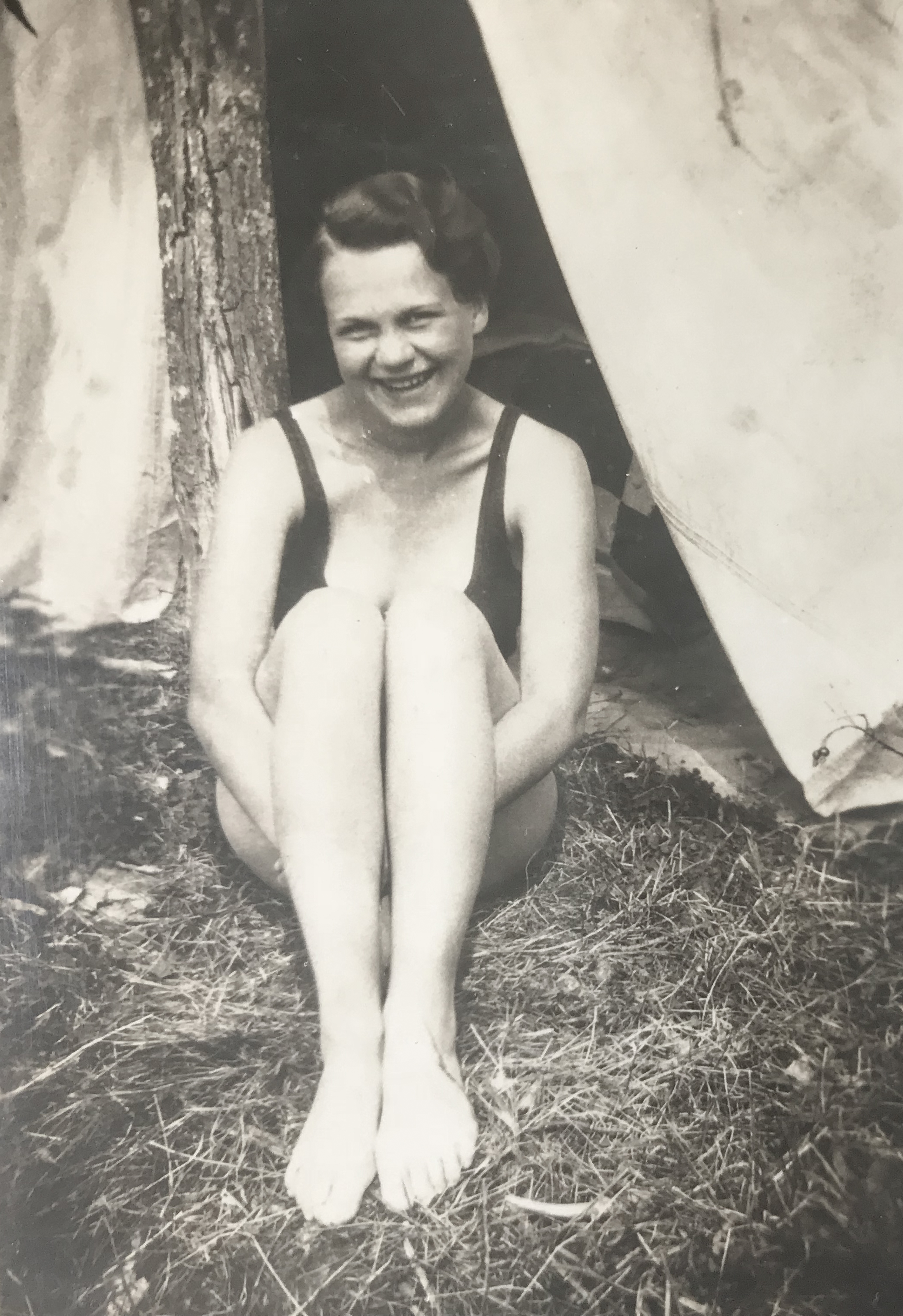
1935 Dorothy campingI told them about Lake Blaine and the big family picnics when we got together with my aunts and uncles and cousins and how some of my girl friends and I went camping there. That was where we all learned to swim and where I had my first boat ride. I told them about the depression.

Finally, I told them about their Grandpa Bill who died when our three sons were 8, 11, and 22. I told them how he traded our new 1939 Nash car for a 1941 Grandpa in the Stearman P-17commercial flying license or 200 hours of flying time. That was what gave us our start and led us out of Montana and eventually to the San Francisco Bay Area where he became an airline pilot and helped to start an airline.
What a fantastic time to have lived! I wonder what kind of stories my granddaughters can possibly tell to their little ones 50 or 60 years from now and what it will take to top this period of time.

Building a timeline

I have been hard at work on a project for several weeks now–establishing a timeline of my grandparents’ lives based on my Grandma Dorothy’s journal. I finished transcribing the journal while I was in California this summer, and then began illustrating it with photos from their lives–which has also meant trying to establish when the various photos were taken.  My dad and I had a chuckle when we discovered that you could often date the photos by the cars in them–the Browns and Gortons did love their cars! My dad’s age is also a good indicator–Baby Jim in the photos in Phoenix or Redlands, a toddler in California, a little older back in Phoenix, a little older in Montana, then back to California. And then there is my grandmother’s writing on the backs of the photos–even a name and a date can place the photo so perfectly in the story.

I suppose that one of the driving factors in this project is the fact that I never knew my Grandpa Brown, who passed away a decade before I was born.  But thanks to this project, I feel like I am getting to know him more and more.

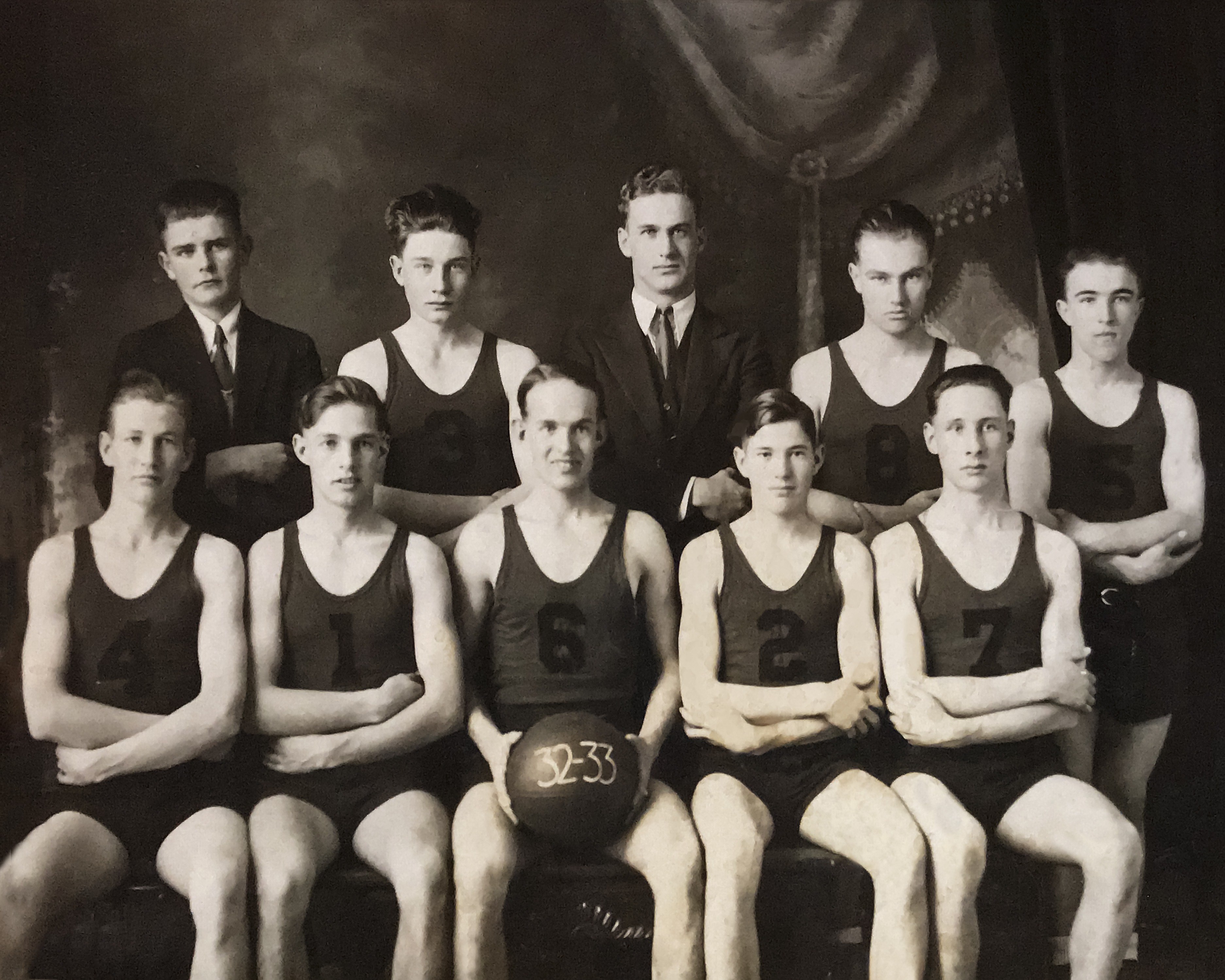
1933 basketball team circle montana

1932-1933 Basketball team, Circle, Montana. Bill Brown is #2, front row

I love this photo of him with his basketball team when he was a senior in high school in Circle, Montana. I can’t get over how much my Uncle Jeff looked like him.

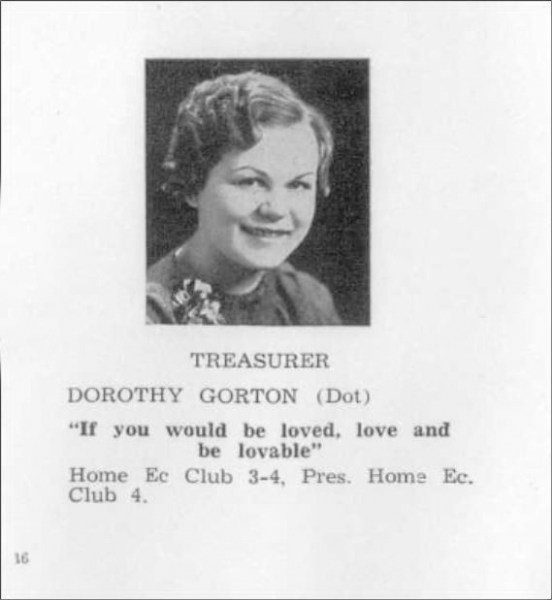
1936 Flathead yearbook Dorothy treasurer

Dorothy Gorton’s Senior Class Officers–she was treasurer. Love her quote, “If you would be loved, love and be loveable.”

And then I look at this photo from my Grandma Dorothy’s senior yearbook (1936), which I found online–and realize that I take after her more and more every day.

Sweet treasures from the past.  Can’t wait to share more of my discoveries.


Alsace

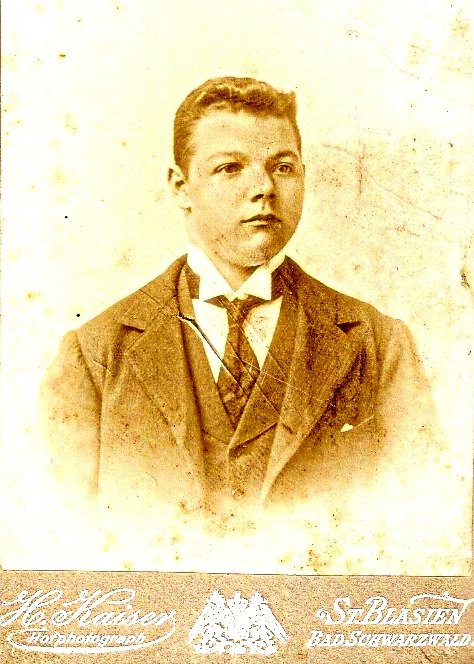
When my great-grandfather met a charming young woman at the opera and borrowed her opera glasses, I wonder if he knew what a departure he was about to take from generations of tradition.

Frédéric Auguste was born in Illkirch, a town in Alsace near Strasbourg, on August 28, 1882.  His beloved Toni–born Theresia Antoinette Lordemann–was born on April 7, 1880, just outside of Münster in Germany. That they met at the opera in New York City and married and lived their lives does not seem particularly remarkable in our American melting pot. But for Alsatians at the turn of the twentieth century, it was troubling at best.67995_10151121095161776_594960160_n (1)

In his 1918 book Alsace-Lorraine, George W. Edwards noted, “Should an Alsatian girl so far forget her vows as to espouse a German, henceforth she was disowned by her own people, and considered as one dead. Thus society dealt with the invader in the two inseparable provinces of Alsace-Lorraine.” I suppose that if that Alsatian girl–or boy–left for the New World and was rarely seen again, the effect on her would be lessened, but this quote certainly reflects the depth of antagonism between Alsace and Germany.

What was the source of this deep animosity?  In 1871–only a decade before Gus’ birth– Germany (Prussia) had siezed Alsace and Lorraine.  The next fifty years saw what Alsatians considered to be an unending occupation of their country by “invaders.” Considering that the Rhine had historically been the border between Germany and France, and noting also that this area was long ago settled by Gallo-Romans and not Teutonic peoples, it seems logical that the area in question should be considered more French than German. That was indeed the feeling of the native Alsatians, who saw the Germans only as an occupying force.

All of this got me thinking about August’s Alsatian background. My grandmother was very much aware of her Alsatian heritage, and grew up speaking her father’s French as well as her mother’s German. (And English, once she started kindergarten.)

So, I began to research the family line of August Fels.

And I hit a treasure trove!

28029_10151121095466776_678029077_n (2)

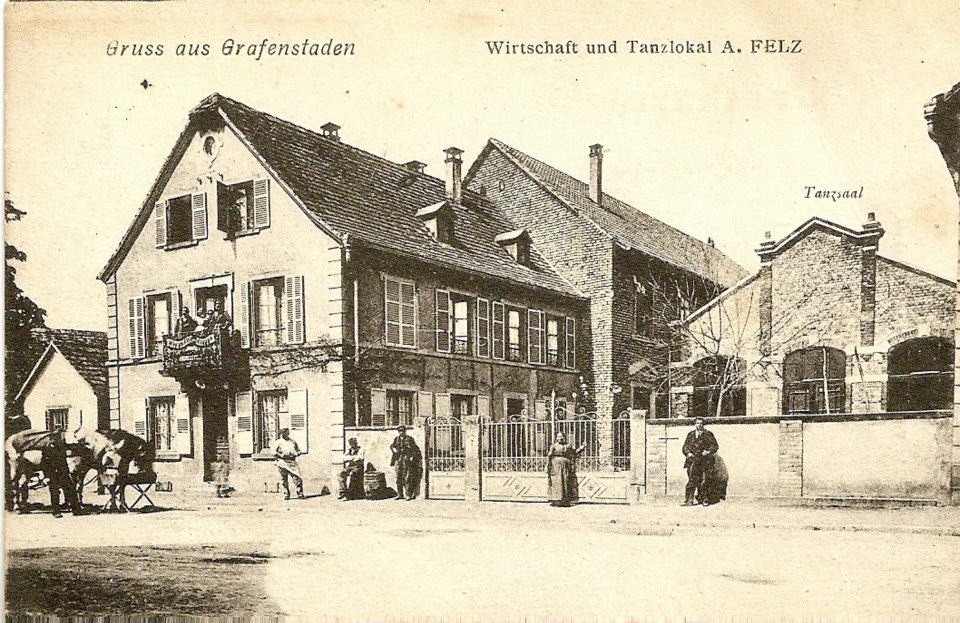
The family inn in Grafenstaden

It turns out that a French historian by the name of Damien Bilteryst has done extensive research on this family tree.  I began adding the names to my own tree on Ancestry.com, and was amazed to see the family living in the same little town, Illkirch, all the way back to the 1500’s and beyond. Generations being born, living, marrying, and dying in this picturesque spot on the Ill River. Many fishermen, as well as churchwardens, farmers, straw-cutters, bakers, innkeepers and others. Even a mayor or two.


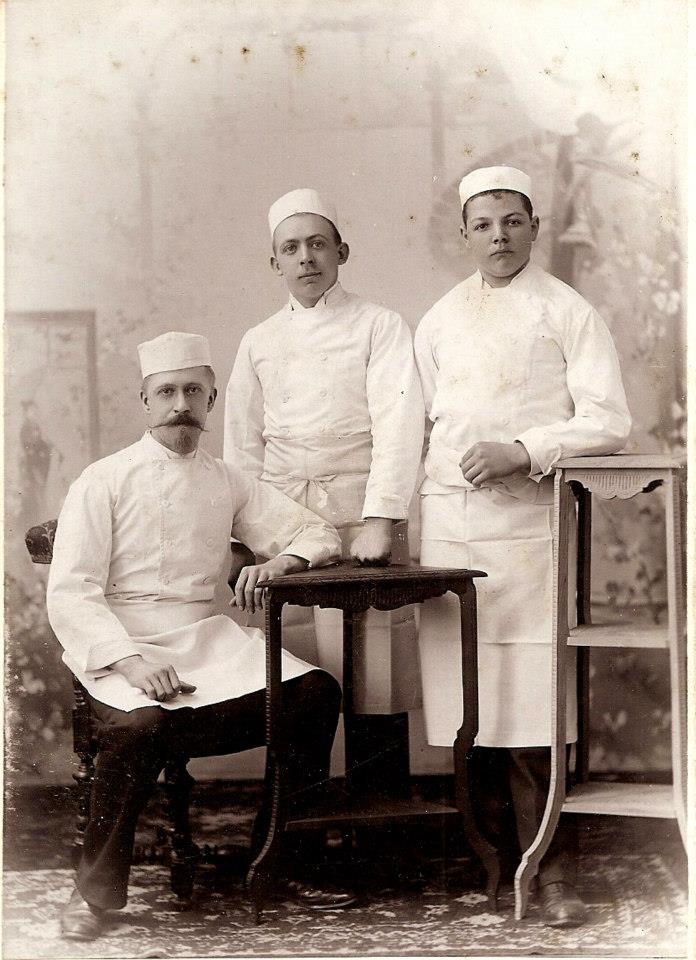
Some of the earliest in the family lines had their marriages recorded: for example, Jacob Haffner and Maria Heyger, married on 9 February, 1623. He was a weaver.  Maria’s father–my 11-great grandfather–was a baker there in the little town of Illkirch. I love that, because my great-grandfather was also a baker, and a chef, and that was part of what drove him to the new world.  Another baker in the family tree was Mr. Roesch, my 12-great grandfather born around 1510, who was a “Boulanger de pain blanc”–a baker of white bread.  I am currently doing a bit more research on this designation, knowing that there were strict rules governing which bakers could bake which types of bread at various points in history. Another baker was another 11-great grandfather, Wendling Meykuchel, born in 1545. One of his sons, Diebold Meykuchel, born around 1570, was a baker and innkeeper; his other son, Hans Meykuchel, my 10-great grandfather born around 1580, was a “Weißbeck,” a “fancy baker” or confectioner.

The earliest “Fels” ancestor I have traced thus far is Claus Veltz, born around 1547 in Illkirch. (The name changed spelling from Veltz to Fels only a generation or two before my great grandfather, as seen below.) Claus married Susanna Fischer on February 4, 1572, and they had at least three children: Catharina, Sebastian (Nov. 10, 1583- Feb. 3, 1645), and Johannes. Sebastian was my 10-great grandfather, a “bourgeois et pêcheur,” or person living in a town and fisherman.

It is rather amazing to trace the lineage of this one branch of the family tree, and see it going back over ten generations in one town in the banks of the Ill:

Claus VELTZ (Fels) (1547 – 1587)
Sebastian VELTZ (1583 – 1645)
son of Claus VELTZ (Fels)
Michael VELTZ (1624 – 1693)
son of Sebastian VELTZ
Elisabeth VELTZ (1678 – 1732)
daughter of Michael VELTZ
Barbara Mursch (1715 – 1771)
daughter of Elisabeth VELTZ
Anna Sengel (1748 – 1822)
daughter of Barbara Mursch
Georges Andres Fels (1817 – 1898)
son of Diebold Thiebault VELTZ (Fels)
Andreas “Andre” Fels (1848 – 1922)
son of Georges Andres Fels


The Fels line weaves in and out of other family lines–Murch, Sengel, Erb, Meykuchel, Schertzer, and others–but it is still striking to see the generations continuing one after another in the same place, and even to this day among the cousins. August would have inherited his family’s land and businesses there in Illkirch, but his round-the-world trip with its unexpected terminus in New York City changed the course of our family history.

So many more stories to tell.

.


Tracing history

I spent a lot of years of school studying history. And whether I was reading about the American colonies or medieval peasants or Roman soldiers or merchants on the silk road, I wondered where my ancestors were living during those moments, and what they were doing.

We all know that there is a story in which we are characters. The story was being written long before we were born, and will continue after we are gone.

Sites like ancestry.com have made it relatively easy for those interested in their own family history to dig into primary sources such as census data, tax records, land deeds, and wills and probate records. The combined efforts of thousands of other historians have produced an amazing volume of material, available anywhere you can access the internet. When I was home with two small babies, I marvelled at how much research I could do from my own house.

This blog is my contribution to the continuing story–a summary of some of the chapters I’ve discovered, an index of some of the characters and times and places that I’ve researched. I believe that all of these stories are actually telling one Great Story, and I am thankful to be part of it.

Soli Deo Gloria.