I have been doing more research lately on the lives of my Norwegian ancestors. I happen to be 25% Norwegian, yet I have never had as close a connection to this part of my heritage. So recently I have been examining the lives of these pioneers.
Tollef Tollefson and his wife Anne were born in the 1820’s in Norway, and immigrated to the United States in 1849 after the birth of their first son. After eleven weeks by boat, followed by an overland journey to Wisconsin, Tollef (Ole) and Anne arrived in Spring Valley, Rock County, Wisconsin, August 15, 1849. Their second son, Henry, was born 3 December 1849. There were seven more children born to the family, all in Wisconsin: Barbra, Martin, Ole, Andrew, Ary, Crist and John. Son Henry married Mary Engen in Wisconsin around 1868; their first son, Sever, was born 16 November 1869.
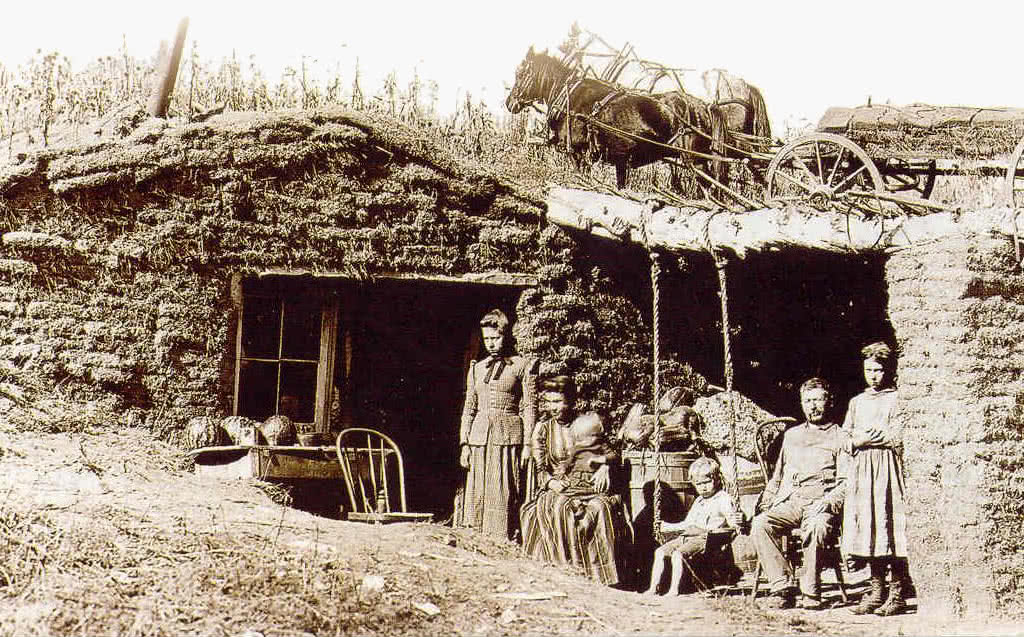
In 1871, Henry Severson moved with his family from Wisconsin to Harvard, Nebraska. According to his daughter, Bertha (Bertie), “In the spring of 1871, they left Wisconsin by covered wagon and ox team for the west–with all their earthly possessions and very little money. When they arrived at a place six miles north of Harvard on a barren prairie they decided this is it. Their first place of shelter was a dugout back in a bank until Father could break ground with an old breaking plow brought from Wisconsin tied on the wagon. He built a one- room sod house, laid logs hauled from the river across the top, then sod on top of that for a roof. “
I had always imagined a soddy to be built into the side of a bank or hill, like in Laura Ingalls Wilder’s On the Banks of Plum Creek; but the process of building a soddy involved cutting bricks of sod from the wild prairie, usually 3×4 feet and three inches thick, and then stacking them into a home. There was little timber to be had, and the frame houses couldn’t stand up to the brutal Nebraska winters. The sod houses were warm(-er) in the winter and cool in the summer, and there was no end of material available.
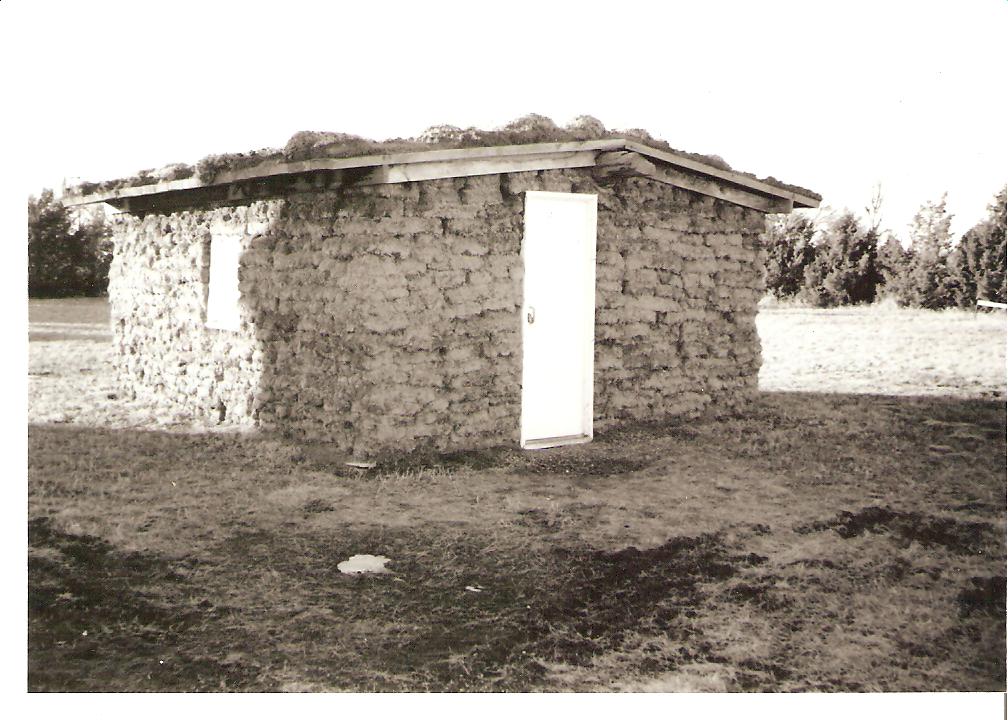
Bertie notes that the sod house “was where Oscar my next brother was born March 27, 1873; shortly after, while Mother was still in bed, the terrible April storm came, snowed them under and the snow drifted and blew through the roof and down on Mother’s bed. I shudder when I think of it…” Grandma used to tell this story, handed down from her husband’s family. I can imagine this young woman with a toddler and a newborn baby, huddled on the bed with snow blowing in through every crack.
This storm was one of the worst ever recorded, thereafter known as The Easter Storm, or the Blizzard of 1873. It began on the afternoon of Easter, April 13, and lasted for three days. Snow blew across the prairie like a wall of white. There were no windbreaks yet built, no trees planted to stop the wind, which howled across the prairie and left families buried in their dugouts. Some neighbors were rescued by other pioneer families who only saw a little smoke trailing out of stovepipes sticking up out of the snow. The drifts were 18 to 20 feet in some places, ravines completely filled with snow. Henry, Mary, and their two sons survived the ordeal, and continued to improve their homestead.
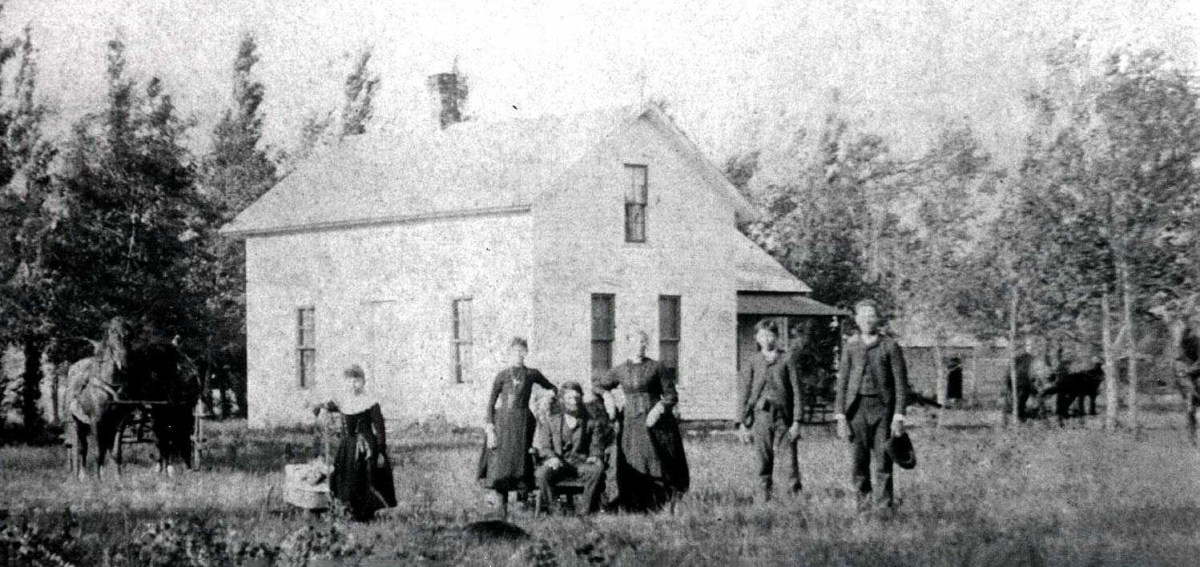
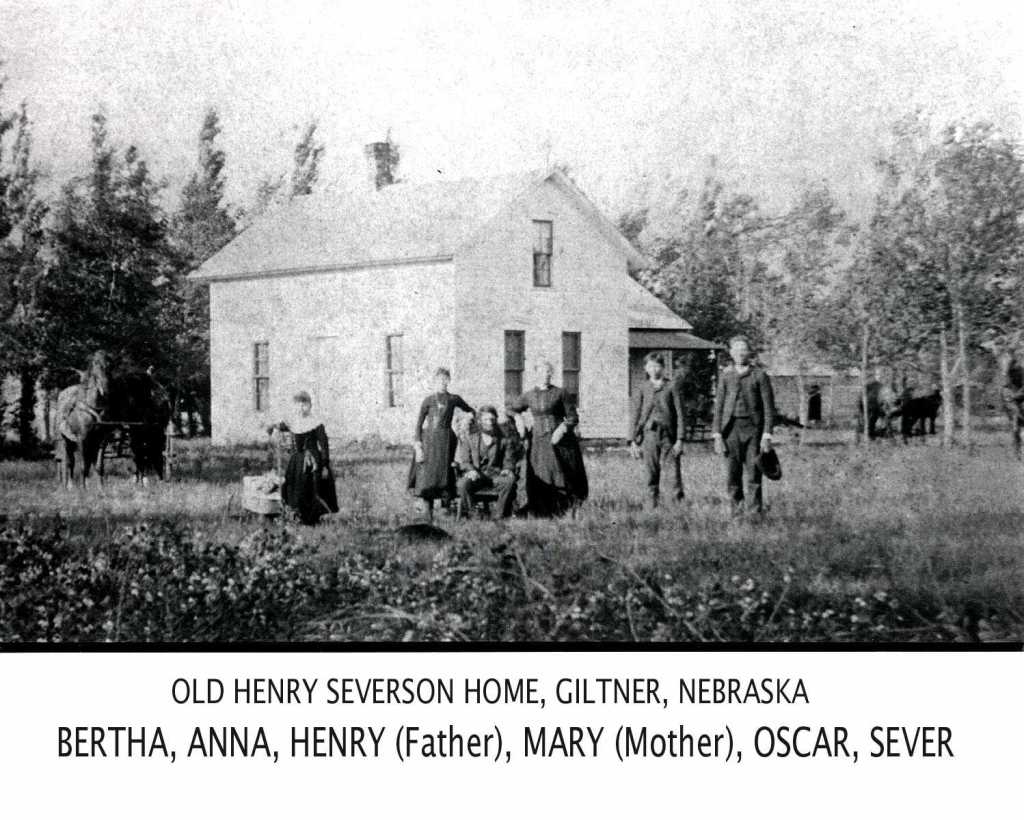
The family eventually built a frame house. Sometimes sod was still used as insulation, with siding built around the sod structure. Henry built a frame house for his family before his daughters were born, and Bertie noted, “A part of our old frame house was built before Annie and I were born, so we can’t say we were born in a soddy.”
 A Continuing Story